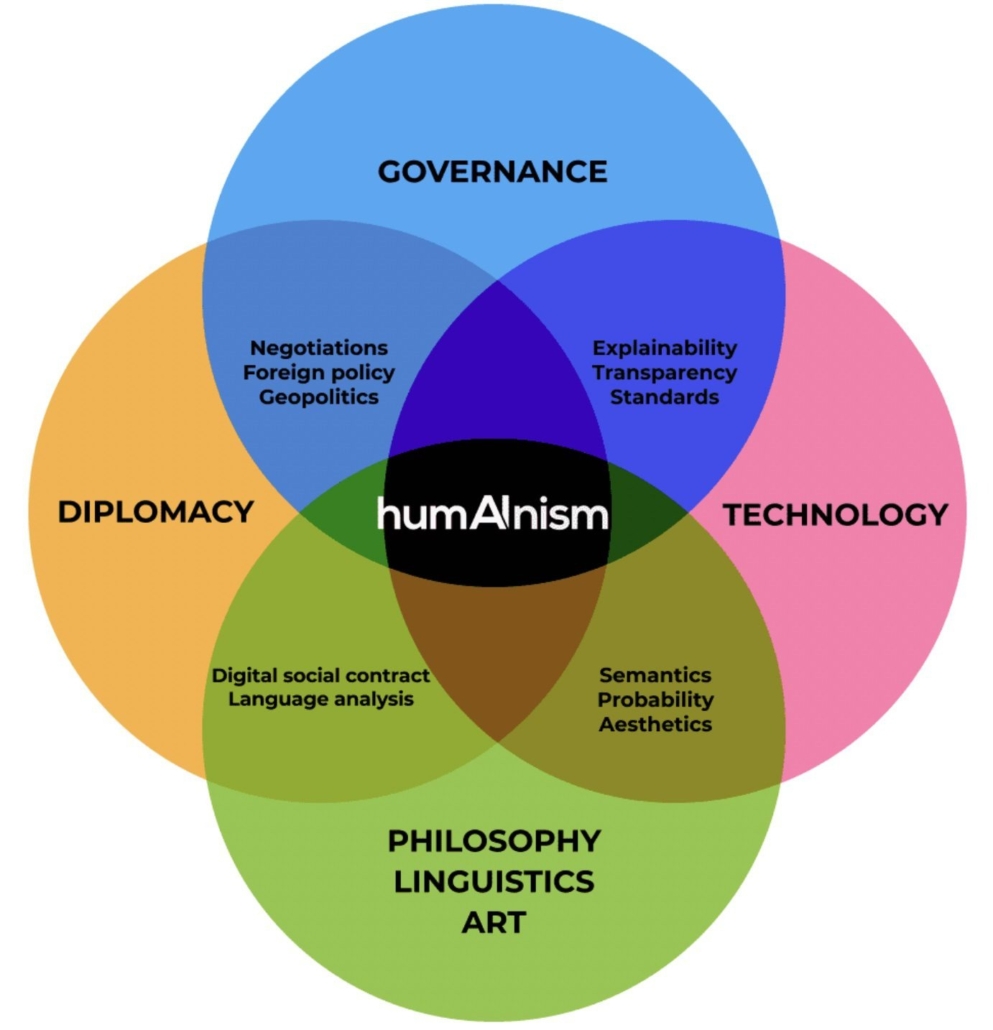
On 21-22 June 2027, Geneva will host the AI Summit. This global gathering arrives at a time of major confusion about AI and its impact on society. The need for new narratives and solutions for AI transformation opens unique opportunities for Switzerland compared to previous summits. The very first summit in this series was held at Bletchley Park, the place where Enigma was deciphered, contributing to the defeat of Nazism. The venue communicated concern about AI as an existential risk to humanity at that time. The Seoul summit highlighted a Korean blend of economic innovation and security. Paris marked a shift from a focus on security and risks to the economic and societal aspects of AI, reflecting French uniqueness. The undertone of last week’s Delhi Summit was development and societal inclusion. Ahead of the 2027 Summit, Switzerland can help focus on practical and impactful AI transformation centred around the so-called Swiss AI Trinity, a combination of innovative entrepreneurship, inclusive governance, and, most crucially, subsidiarity, a way of using technology as an enabler of citizens and their communities. In this way, the Summit can bring more clarity to the increasingly confused AI discussion, which is shaped by hype and false dichotomies between doomers, who see AI as an existential threat, and accelerationists, who consider the unlimited growth of AI to be entirely beneficial for humanity. Swiss hype resistance, shaped by historical and cultural factors, will be beneficial in revitalising sound judgement in AI thinking, language, and action. Against this backdrop, this text suggests ten signposts on the Road to the 2027 Geneva AI Summit. Each signpost is explained in the context of the Swiss policy landscape and supported by DiploAI research, training, and policy monitoring via Digital Watch portal. AI innovation is inseparable from knowledge creation. It is not only about building more powerful models, but about activating, structuring, and applying human knowledge in meaningful ways. Switzerland’s approach illustrates this shift from scale-driven competition to knowledge‑centred innovation. Switzerland has consistently ranked among the world’s leading innovators, favouring grounded developments that address real societal needs rather than chasing technological spectacle. This philosophy is reflected in Apertus, a ‘radically open’ large language model (LLM) whose full development process – including architecture, model weights, and training data – is openly available. At a time when many models are labelled ‘open’ yet restrict access to core components, Apertus embodies a commitment to transparency and collaborative innovation. Although Apertus does not match the trillion‑parameter scale of leading US and Chinese models, its 70‑billion‑parameter design is sufficient for practical applications in academia, business, and government. More importantly, it is fine‑tuned for multilingual use, reflecting Switzerland’s linguistic diversity and societal values. In this sense, innovation is not measured solely by size but also by contextual relevance and accessibility. The broader lesson is that AI is increasingly commoditised. As new models emerge daily and open‑source systems allow rapid retraining, competitive advantage no longer rests primarily on hardware or raw model size. Instead, it depends on the quality of data, the richness of knowledge, and the meaningful integration of AI into economic and social processes. The frontier of innovation is shifting from building ever larger models to embedding AI into workflows across education, industry, and public administration. LLMs themselves operate at the level of knowledge. They can be understood as “polymaths by design,” democratising access to expertise once limited to a few specialists. Yet, their real value emerges only when they are anchored in societal knowledge ecosystems. Innovation, therefore, increasingly requires mobilising citizen and institutional knowledge through practices such as data labelling, knowledge graph development, and reinforcement learning embedded in business processes and educational pedagogies. At Diplo, this holistic approach to AI, innovation, and knowledge is pursued via the humAInism methodology, which situates AI within a wider intellectual and cultural context. Rather than treating AI as a purely technical artefact, humAInism emphasises the nexus between artificial and human intelligence, drawing on philosophy, sociology, diplomacy, and the arts alongside computer science. Institutions are seen not merely as administrative units but as carriers of societal memory and knowledge, shaping how AI systems are developed and deployed. humAInism: Holistic methodology for research and training in AI
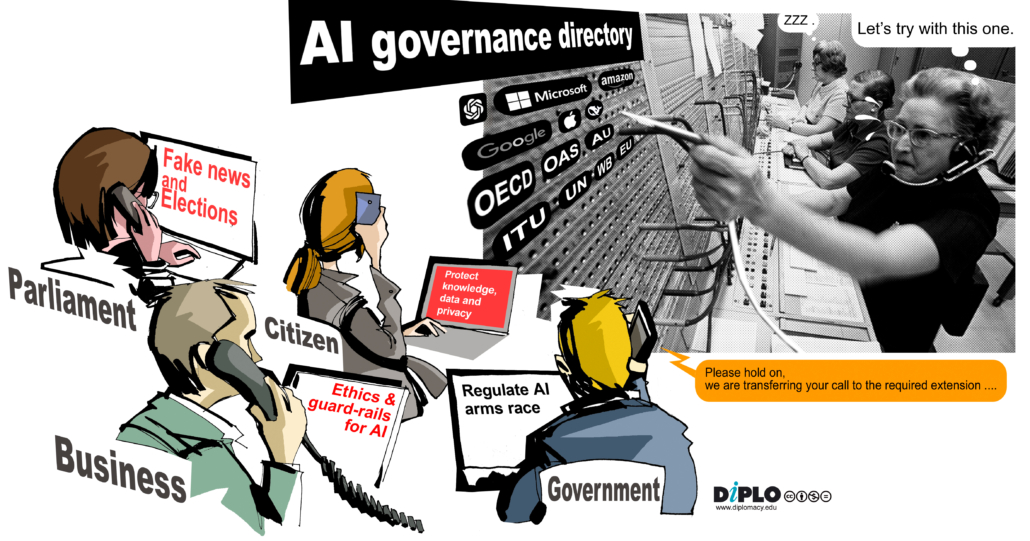
As illustrated above, the ultimate simple question about governance is: Whom can citizens, companies, and countries call to address their AI problems? And even more importantly, who will ‘pick up the phone, as illustrated below. The good news is that many regulatory issues are already addressed by existing privacy, commercial, criminal, and other rules. Often, the issue is not the absence of rules, but a lack of political will to apply existing ones. Thus, AI governance will be more about implementing current regulations—with amendments when needed—than about drafting new ones from scratch. At the recent Summit in New Delhi, enthusiasm for broad AI governance has waned, shifting away from the existential-risk framing that dominated earlier debates, particularly during the first Summit at Bletchley Park. In this context of a common-sense approach to AI governance, Switzerland and Geneva can make a significant contribution. First, the application of existing international governance mechanisms to AI will naturally take place in Geneva, home to numerous organisations dealing with trade, health, telecommunications, labour, and security. Second, the recently appointed International Scientific Panel on AI can draw on the experience of the Geneva-based IPCC (International Panel on Climate Change), which has long navigated the delicate intersection of climate science and diplomacy. Third, Switzerland’s experience in bottom-up policy development offers a model for integrating citizen voices into AI debates, which will be essential for inclusive and legitimate governance. Finally, Switzerland’s cautious regulatory approach, introducing new legislation only when existing rules fall short, resonates well with the emerging consensus on pragmatic AI governance. Governance becomes tangible through institutions that implement rules, provide predictability, and ensure stability. Yet in the ‘efficiency era’, institutions have faced significant pressure and attacks questioning their efficiency and, often, their very purpose. While criticisms of institutional efficiency are often justified, they tend to overlook the broader importance of institutions to humanity, beyond the efficient provision of services. Institutions facilitate social stability and a predictable environment for citizens and companies. They also serve as carriers of legitimacy and representation at the international level. For example, a key function of diplomats is to represent their countries effectively, with varying degrees of efficiency. Institutions are also important carriers of societal memory and knowledge. Most traces of ancient civilisations reach us through clay tablets—accounting records, laws, or diplomatic exchanges such as the Tell Amarna letters from Ancient Egypt. More recently, the impact of the US DOGE initiative has shown how the rushed dismissal of officials can lead to the loss of valuable institutional knowledge, especially tacit knowledge.
Thus, there is a risk that we won’t see the forest (overall purpose of institutions) by focusing exclusively on the trees (institutional efficiency). This risk can be avoided if AI is considered as a creative change agent that can, among other things, preserve institutional memory and strengthen the capacity to respond to societal needs. Here, the Swiss rather lean administration demonstrates that institutions can be effective without being excessive. A case in point is Swiss digital diplomacy, a tiny team which has contributed significantly in most internet, digital and AI negotiations over the last few decades, including co-leading WSIS process (2002-2005), leading the setting of the IGF (2006-2010), negotiating delicate IANA transition of the ICANN (2015), co-sponsoring the UN High-Level Panel on Digital Cooperation, leading the negotiation process for the Council of Europe AI Convention. At Diplo, the AI challenge for management and organisational dynamics is addressed through a cognitive proximity approach to enhance cooperation among humans and between humans and AI systems. In this approach, technology is not an end in itself but a tool to help individuals to work better together. Creative solutions emerge through close human-machine interplays. In Swiss tradition, sovereignty is built from the bottom up through subsidiarity and the inclusion of citizens and communities in decision-making on critical societal issues. The principle of subsidiarity stipulates that governance should take place as close as possible to the citizens and communities it affects. Education and many other policy areas are governed by the cantons and, often, by local communes, within a careful system of checks and balances. This model distributes authority while preserving overall coherence. The carefully balanced interplay between subsidiarity and sovereignty is becoming particularly relevant in the context of AI. Growing concern centres on the concentration of AI capabilities within a few global platforms, raising fears of technological dependence and digital monopolisation. These risks have increased calls for digital sovereignty, broadly understood as control over infrastructure, platforms, and data processing within a territory. However, sovereignty is not merely a matter of central state control; it also depends on who generates, controls, and benefits from knowledge. AI systems, particularly large language models, operate at the level of knowledge rather than just raw data. Therefore, AI sovereignty concerns not only data localisation or infrastructure ownership, but the preservation and development of human knowledge ecosystems. If knowledge becomes centralised in a handful of distant AI mega-hubs, sovereignty erodes—even if formal legal authority remains intact. Here, subsidiarity provides a structural answer. AI subsidiarity anchors AI development in the communities where knowledge is generated through daily interactions—in agriculture, tourism, education, manufacturing, culture, and countless other local contexts. Knowledge creation is not confined to universities and think tanks; it is embedded in social and economic practice. These local knowledge ecosystems form what can be described as a terroir savoir for AI: just as terroir shapes wine through the characteristics of land and climate, local dynamics shape savoir (knowledge) and its application. By enabling communities to develop, adapt, and deploy AI tools that reflect their specific needs, cultures, and contexts, sovereignty is constructed from the ground up. This aligns with the idea that sovereignty does not necessarily imply isolationism or fragmentation; it can coexist with interoperability and cooperation. In this perspective, subsidiarity prevents sovereignty from becoming a purely centralised or defensive concept. Instead, it transforms sovereignty into a distributed, participatory capacity. The global debate confirms that digital sovereignty must avoid becoming a tool of state or corporate concentration, and instead remain socially driven and transparent. Subsidiarity ensures precisely this: decision-making remains close to those affected, reinforcing accountability and legitimacy. At the same time, it supports interoperability through harmonisation rather than homogenisation, allowing integration into global networks without losing local agency. For most UN Member States—aside from the few countries that exercise full legal and technical control over their digital ecosystems—the challenge is to balance sovereignty with interdependence. The Swiss experience is instructive. Switzerland maintains political and military sovereignty to preserve its neutrality, yet remains deeply intertwined with global economic and digital networks. Its sovereignty is resilient precisely because it is built on strong local autonomy combined with international engagement. Thus, subsidiarity and sovereignty are not opposites. Subsidiarity is the operational method through which sovereignty becomes durable and legitimate. In the AI era, sovereignty over infrastructure, digital activities, and knowledge will be sustainable only if rooted in distributed knowledge ecosystems and empowered communities. Sovereignty, in this sense, is not imposed from above; it emerges from below.
Philosophy graduates are increasingly in demand among AI companies, with stronger prospects than software developers, according to an article in The Economist. This shift in preferred skills also signals a broader refocusing of AI: from pure technology towards epistemology — how we know — and ethics — how we should act. This shift is not surprising, as AI holds a mirror to humanity, raising fundamental questions about free will, morality, and what it means to be human. In response, societies worldwide are revisiting their cultural, religious, and philosophical roots. The emerging field of EspriTech — an interdisciplinary approach to understanding the relationship between society and technology — invites us to look back to the Axial Age and its legacy, when traditions such as Judaism, Buddhism, Taoism, Greek philosophy, and Hinduism, followed later by Christianity and Islam, placed human predicaments at the heart of spiritual and intellectual life.
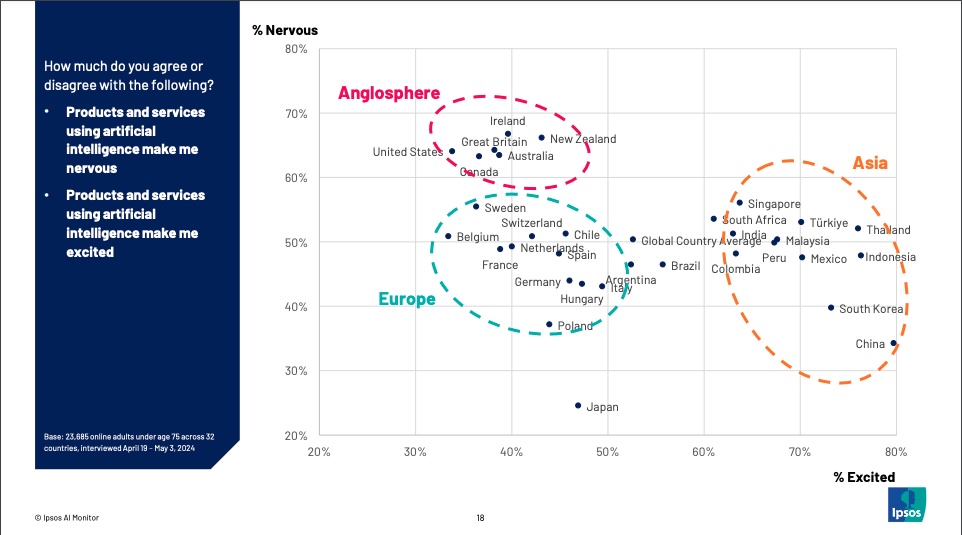
Many ideas and ways of thinking about society and technology can be traced to thinkers who lived in Geneva. At Villa Diodati on Lake Geneva, Mary Shelley wrote Frankenstein, offering a warning about the dangers of scientific curiosity untethered from ethical responsibility. Jorge Luis Borges, a citizen of Geneva, explored the limits of human knowledge in The Library of Babel. Jean-Jacques Rousseau grounded sovereignty in the individual, while Voltaire championed freedom and critical thought. Ferdinand de Saussure laid the groundwork for structural linguistics, a foundation for modern natural language processing. These and other lessons from the EspriTech de Genève can help fine-tune debates on AI and humanity. The 2024 IPSOS study shows that trust in AI varies sharply across regions: people in many Asian countries report high excitement about AI, while respondents in most developed economies, especially the United States, express nervousness and lower confidence in AI [1]. One driver of mistrust in AI has been the AI‑doomer narrative that dominated media coverage in 2023‑2024, repeatedly warning of existential threats posed by advanced AI systems. The constant focus on survival‑of‑humanity scenarios created a predictable societal reaction: a drop in willingness to adopt AI and to share personal data with AI‑driven services. Switzerland, by contrast, enjoys high ‘trust capital‘ both internally in technology and, in particular, from outside. The country’s long‑standing political stability, strong data‑protection regime and reputation for neutrality give it a solid foundation for a “trust‑but‑verify” approach to the digital era. Cybersecurity is a critical pillar of digital trust. It is central in many Geneva-based initiatives, including the Geneva Dialogue, which focuses on: By coupling realistic risk communication with concrete cybersecurity cooperation through initiatives such as the Geneva Dialogue, Switzerland can help shift global AI emotions from fear‑driven scepticism toward a more balanced, evidence‑based management of AI and digital risks.
The rapid diffusion of AI across every sector has made the shortage of relevant skills the most frequently cited obstacle to realising AI’s benefits. Capacity development ranges from understanding AI among political and business elites to adapting professions affected by AI developments. AI’s probabilistic nature requires a new pedagogical approach. Capacity‑development programmes now have to address three overlapping audiences: Traditional classroom instruction, which often treats AI as a static body of knowledge, struggles to convey the uncertainty and statistical reasoning that underlie modern machine‑learning models [1]. An emerging alternative is “learning by developing AI”: learners acquire concepts while they design, train and evaluate real‑world algorithms [2][3]. This hands‑on, iterative approach mirrors problem‑based learning and aligns with the need to internalise probabilistic thinking [1].
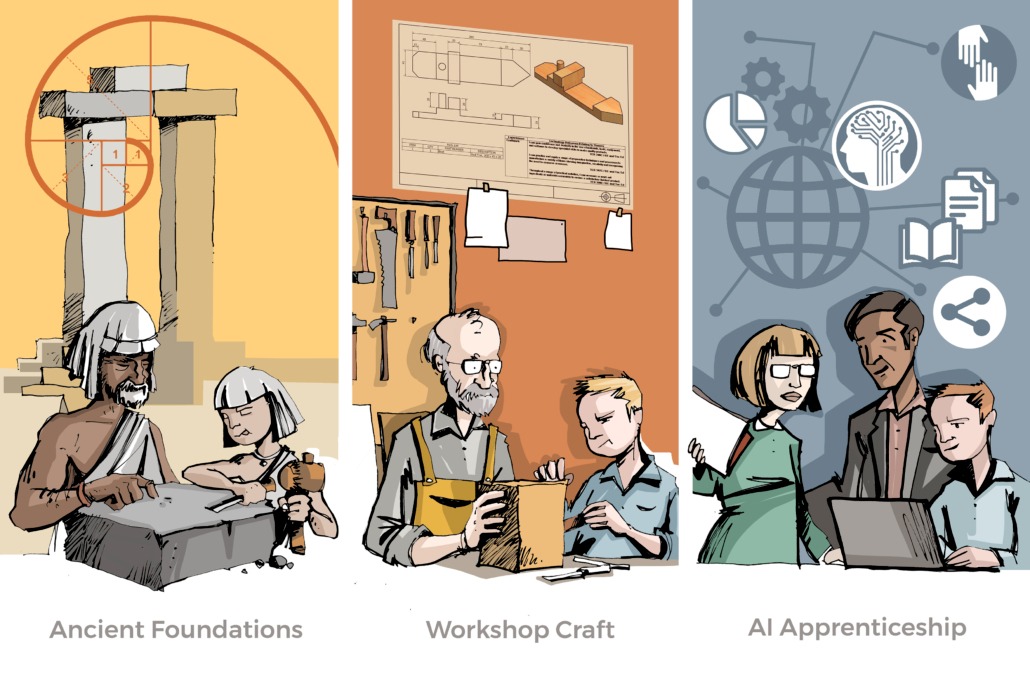
The Swiss vocational system, long praised as a gold standard of apprenticeship, combines learning by doing, close mentorship and lifelong up‑skilling. Diplo’s AI‑Apprenticeship programme deliberately transfers this model to the digital sphere: apprentices work in small, mentor‑guided teams to create functional AI artefacts (e.g., chat‑bots) while receiving layered theoretical scaffolding that is progressively withdrawn as competence grows . Over the past 18 months, Diplo ran the AI‑Apprenticeship with more than 100 participants drawn from diplomatic services, civil society NGOs and local community organisations . Participants reported: The word humanity has become a refrain in every major AI‑related address – from United Nations speeches to the World Economic Forum and the India Impact Summit – where speakers repeatedly declare that ‘AI must serve humanity’. While the sentiment signals genuine concern, the risk is that repeated slogans become empty truisms unless they are given concrete meaning. The 2027 AI Summit can provide greater meaning to the slogan of human-centred AI. Geneva already hosts the institutional ‘human‑dimension’ of AI governance. The city concentrates the UN Office of the High Commissioner for Human Rights, the International Telecommunication Union, the International Organization for Standardization, the International Electrotechnical Commission and the World Trade Organization – bodies that together shape technical standards, trade rules, and human‑rights frameworks that will determine how AI is designed, deployed and overseen . This concentration makes Geneva a natural venue for multilateral dialogue linking technology to the protection of human dignity, health, migration, labour, and development. Human-centred AI can draw on the Swiss tradition of subsidiarity (decisions made as close as possible to those affected) and low‑hype, problem‑oriented innovation. The intellectual heritage of Geneva reinforces the human focus. The EspriTech de Genève narrative reminds us that the city’s thinkers – from Mary Shelley’s early warning about creator responsibility in Frankenstein to Jorge Luis Borges’s reflections on knowledge and cognition – have long linked technology to ethical questions about what it means to be human. Contemporary scholars argue that AI policy must be anchored in the ’embodied experience’ of people, preserving creativity, imperfection, and ethical judgment even as machines become more capable. In sum, International Geneva offers a uniquely layered ecosystem – technical standard‑setting, multilateral diplomacy, a rich intellectual tradition, and a Swiss‑inspired human‑centred policy culture – that can translate the abstract promise “AI must serve humanity” into measurable policies, standards, and programmes that protect human dignity, promote inclusive innovation and safeguard the imperfect, creative nature of humanity itself. The impacts of AI on nature and the environment comprise three interdependent layers: the geosphere (physical Earth), the biosphere (living systems), and the noosphere—the sphere of human thought, according to Russian scientist Vernadsky, and of spirituality, according to French philosopher Teilhard de Chardin. AI impacts all three, and a growing global governance architecture is emerging to address this interplay. In the geosphere, AI is materially grounded: training models consumes vast amounts of energy and water, rare‑earth mining scars landscapes, and e‑waste exceeds 70 million tonnes annually. To address this, the Coalition for Environmentally Sustainable AI—spearheaded by France, UNEP and ITU with over 100 partners, including 37 tech companies and eleven countries—is developing standardised metrics for measuring AI’s environmental impacts and comprehensive life‑cycle reporting frameworks. In 2025, UNEP will publish a guide to encourage public and private procurement towards energy‑efficient data centres, while the UNEP‑led Global Environmental Data Strategy promotes interoperable, AI‑ready data ecosystems to strengthen the science‑policy interface. In the biosphere, AI aids conservation through monitoring and prediction, yet also enables intensified exploitation and raises concerns for human agency. The UNESCO Recommendation on the Ethics of AI (2021)—the first global standard on AI ethics, applicable to all 194 member states—explicitly enshrines environmental sustainability as one of its core principles. Its AI for Environment and Ecosystems Toolkit translates these principles into implementable actions for governments, anchoring national strategies in the Paris Agreement, the Kunming‑Montreal Global Biodiversity Framework, and the Sustainable Development Goals. In the noosphere, AI accelerates knowledge production but challenges truth and verification, while prompting deeper spiritual questions about dignity and meaning. Pope Leo XIV’s encyclical Magnifica Humanitas focuses on the links between AI, nature, and spirituality. These layers are deeply connected. AI depends on Earth’s resources, affects living systems, and reshapes human thought in return—a feedback loop that governance must address across the full life cycle, from mineral extraction to e‑waste. Geneva’s Jardin Botanique offers a concrete space to reflect on this interplay between nature and AI. Multilateralism and diplomacy have evolved in response to technological change and growing interdependence. The first permanent international organisations emerged in the 19th century to manage cross‑border challenges, notably with the establishment of the International Telegraph Union (now the International Telecommunication Union, ITU) in 1865. This marked a shift from bilateral arrangements to comprehensive multilateral frameworks, recognising that technological connectivity required to be coordinated international governance [1]. The ITU’s evolution illustrates how institutional purpose can remain stable even as technology changes. Founded to ensure seamless telegraph communication across borders, it created a multilateral arrangement to avoid the need for retyping messages at national frontiers. Today, the same organisation facilitates global connectivity in areas ranging from telecommunications infrastructure to digital standards, demonstrating the continuity of its core mandate despite profound technological transformation. This continuity reflects a broader diplomatic lesson: while tools evolve—from telegraph to AI—the mission of diplomacy to foster cooperation and resolve cross‑border challenges remains constant. In debates about the future of the United Nations and multilateralism, it is therefore essential to return to first principles. Multilateral arrangements encompass not only international organisations such as the UN but also treaty regimes, negotiation processes and broader institutional orders that structure global governance. The question is not whether multilateral cooperation is needed—transnational challenges such as digital governance, cybersecurity, and AI clearly require coordinated responses—but how existing institutions can adapt to new realities. Rather than creating entirely new structures, reforming and modernising established institutions may offer greater legitimacy and efficiency. The UN system has already experimented with digital transformation to improve its functioning. As early as 1998, the UN Secretary‑General identified the creation of a “fully electronic United Nations” as a priority, including improved access to documents and the use of videoconferencing to support negotiations [5]. During the COVID‑19 pandemic, multilateral diplomacy demonstrated both vulnerability and resilience: while informal encounters were reduced, digital tools ensured continuity of core diplomatic functions [6]. Artificial intelligence can further strengthen multilateral processes. AI systems can transcribe debates, structure deliberations and provide analytical insights into negotiations, thereby supporting smaller and developing countries that lack extensive human resources to follow multiple diplomatic tracks [7]. AI will not replace diplomats, but it can profoundly change how diplomacy is conducted by offering structured knowledge, negotiation insights and more transparent documentation of proceedings [7]. Such AI‑enabled practices can enhance legitimacy by ensuring that contributions to consultations are traceable and reflected in policy outcomes. In multistakeholder settings—where governments, civil society and the private sector interact—transparent digital tools can reinforce trust and accountability [8]. Multistakeholder diplomacy has increasingly complemented intergovernmental negotiations, allowing non‑state actors to contribute expertise in areas such as sustainable development and information society governance [8]. Diplo’s long‑standing work on online diplomacy reflects this evolution. Since the 1990s, it has experimented with digital tools to overcome physical remoteness in diplomatic engagement [5]. During the COVID‑19 crisis, this expertise supported business continuity in Geneva’s multilateral ecosystem [6]. More recently, AI‑based systems have been used to transcribe and analyse UN debates, preserving institutional memory and making diplomatic processes more accessible [7]. In sum, multilateralism remains essential in managing an interdependent world. Historical experience—from the telegraph era to today’s AI age—shows that institutions can adapt while retaining their foundational purpose [1][3]. The challenge in the AI era is not to abandon multilateral institutions, but to modernise and strengthen them—using digital tools and AI to enhance inclusivity, efficiency and legitimacy in global governance [5][7]. Diplo has experimented with online diplomacy since the 1990s, overcoming physical remoteness. During COVID-19, this expertise supported business continuity in Geneva. Diplo’s spin-off, fAIcon, uses AI to transcribe, structure, and preserve knowledge generated at events (see: fAIcon reporting from the New Delhi AI Summit). Geneva has become the world’s hub for turning technical debates into globally binding rules. The city hosts a tightly‑linked cluster of inter‑governmental standard‑setting bodies—most prominently the International Telecommunication Union (ITU), the International Organization for Standardization (ISO) and the International Electrotechnical Commission (IEC) . Their consensus‑driven, transparent procedures aim to produce open, interoperable and non‑discriminatory standards covering everything from radio‑frequency management to the safety of emerging technologies. AI’s probabilistic nature and cross‑sector impact have amplified the need for specialised norms. In a 2021 high‑level panel, the CEOs of IEC, ISO and ITU underscored shared values—transparency, inclusivity and consensus‑based decision‑making—and announced coordinated work on AI‑trustworthiness, sustainability, functional safety and data‑quality standards . These initiatives reflect a broader consensus that standardisation is a foundational building block of the Information Society, enabling affordable access to ICT and supporting digital inclusion in developing economies. The consensus‑based approach deliberately “opens the floor” to all member states, ensuring that low‑ and middle‑income countries can influence the technical content and avoid standards that become de facto trade barriers. The World Trade Organization recognises standards from ITU, ISO and IEC as essential tools for eliminating technical obstacles to trade. Moreover, capacity‑building programmes attached to AI standards (e.g., training workshops, open‑source reference implementations) are used to raise AI literacy in Africa, Latin America and the Pacific, linking standardisation directly to digital inclusion. The 2027 AI Summit in Geneva can be far more than a single event. It has the potential to be the starting point for a new, more mature phase in the evolution of AI, one that replaces false dichotomies with nuanced understanding and centralised AI with distributed empowerment. By increasing clarity of debate, AI discourse can be elevated from an existential threat or a magical solution to a powerful, practical, and trustworthy instrument for human betterment. At Diplo, together with our partners in Geneva, Switzerland, and worldwide, we will ‘walk the talk’ on the Road to 2027 AI Geneva by providing training, monitoring policy developments, reporting on events, developing new policy tools, and seeking new ideas beyond limited thinking ‘boxes’ and frames.
1. Knowledge and innovation
2. Governance and institutions
Institutions
3. Subsidiarity and sovereignty
4. EspriTech and philosophy

5. Trust and security
6. Apprenticeship and education
Why are new skills central to AI‑driven change?
A new pedagogical turn: learning by building AI
Historical roots in the Swiss apprenticeship model
Evidence from the pilot phase
Complementary international experiences
Key design principles for scaling AI Apprenticeship
7. Humanity and human rights
8. Nature and environment
9. Multilateralism and diplomacy
10. Technologies and standards
Next steps