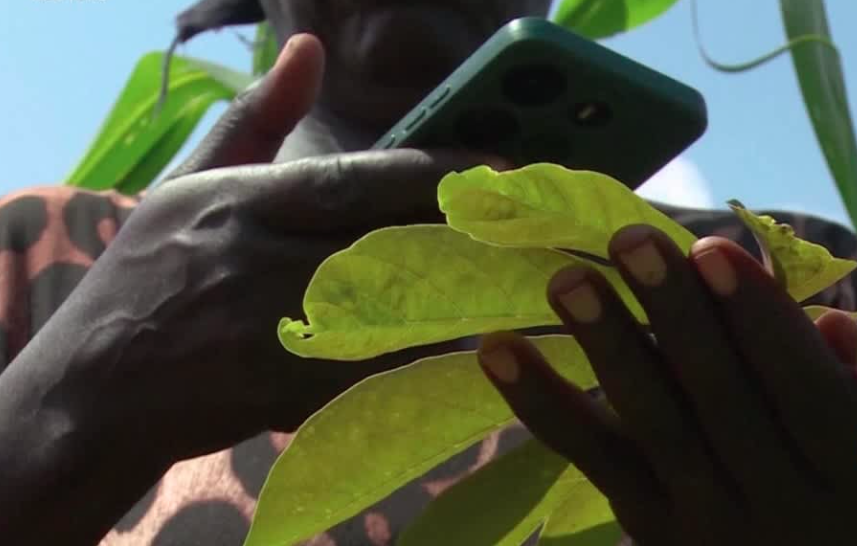
In rural Kenya, a smallholder farmer points their basic smartphone at mottled cassava leaves. Within seconds, an app powered by open-weight AI delivers a precise diagnosis: cassava mosaic disease, with treatment steps in Swahili and even fertiliser recommendations tailored to local soil pH. The tool works offline and runs on low-end devices, without requiring costly subscriptions or sending farm data to distant cloud servers. Local developers have fine-tuned freely available models on national crop datasets, adapting them to local conditions. For countries with limited resources, open-weight models offer a first real chance at sovereign AI, instead of having to rent capabilities from large U.S. or Chinese providers. Smart procurement turns that promise into reality by embedding safeguards into contracts that favour customizable technology over black boxes. The proof lies in actual deployments where agricultural tools cut crop losses by around 30% and maternal health chatbots reach millions of users in local languages. Wins like these are possible when governments and local developers combine affordable open weights with homegrown datasets that reflect their own dialects, climates, and social realities, instead of relying on one-size-fits-all models from big tech. This kind of technical capacity becomes a source of resilience in diplomatic terms because food-secure countries negotiate from a stronger position, and healthier populations make regions more stable. It also offers a different story about AI, one that is not only about dependency or technological empires, but about shared tools that can be adapted to local needs.

PlantVillage’s Nuru app is a good example in Kenya, where farmers snap photos of diseased crops such as maize, cassava, and tomatoes. Open-weight models fine-tuned on Hugging Face with tens of thousands of local images achieve around 98% accuracy and, in some trials, outperform proprietary rivals by combining plant images with satellite weather data for outbreak predictions. By 2024, the app had reached more than 50,000 users across East Africa and delivered advice in Swahili and English, including in offline mode on low-end Android phones. Yield gains of roughly 25% to 35% in pilot regions translated into real income for smallholders and into macro-level resilience, where agriculture still employs most of the workforce.
In Kenya, Esther Kimani’s solar-powered pest detector takes this a step further. Her innovation, which farmers can lease for about 3 dollars per month, uses open-weight computer vision models to scan fields continuously and to spot fall armyworms or locusts before visible damage appears. The device sends SMS alerts to farmers and extension services and can recommend pesticide quantities or other interventions. Trials show that it can reduce losses by around 30% and, in some cases, increase yields by up to 40% for smallholder farmers. Because the system runs locally and relies on solar power, it works in low-connectivity areas, and governments or cooperatives can buy the hardware once while communities fine-tune the underlying models as new pests appear.
These tools reverse the logic that we explored in the recent article on AI procurement. Instead of vendors dictating terms, ministries now specify requirements such as downloadable weights, local fine-tuning rights, and clear audit clauses in their requests for proposals. This kind of procurement ensures that a country can adapt the same tool to new crops, pests, or languages without having to return to a foreign vendor each time. From a diplomatic standpoint, strengthened food security is a key variable in trade negotiations, climate adaptation efforts, and even peacekeeping operations, where hunger often aggravates conflict dynamics.
In Zambia, the DawaMom platform shows how open weights translate into health sovereignty. DawaMom offers a WhatsApp and SMS based chatbot that guides rural mothers through pregnancies, from trimester tracking to warning signs such as preeclampsia, anaemia, or bleeding. It runs on multilingual AI backends that can be fine-tuned on Zambian health data and that support Bemba, Lozi, Nyanja, and other languages. Pilot data suggest that it can significantly shorten referral delays for high-risk pregnancies in provinces where clinics are several hours away and where maternal mortality rates remain high.
Similar approaches are emerging in India. State governments experiment with open-weighted models for voice triage in Hindi and regional languages, and integrate basic health records to offer personalised advice on nutrition or follow-up visits. One procurement in a poorer state reached millions of women at a fraction of the cost of a proprietary telehealth solution, because once the model and the basic infrastructure were procured, the health department could continue to retrain it on new data without paying new license fees every year.
Here again, good procurement practices make the difference. Contracts require transparency in model architectures and weights, local data sovereignty, and interoperability with existing health systems rather than closed platforms. That translates into tools that evolve with outbreaks, mobility changes, or climate shocks, rather than lagging behind because an overseas vendor has different priorities.
Open-weight systems did not arrive as a ready-made solution. Early deployments in agriculture and health ran into hard constraints on local compute, data, and skills. University labs in Nairobi, Lusaka, and other cities addressed the compute gap by pooling donated GPUs and building small national clusters. Civil society organisations and farmer groups worked with researchers to crowdsource tens of thousands of labelled crop images and to anonymise health records in accordance with ethical standards.
Bias and accessibility issues were equally real. Early models struggled with dark-skinned maternal health data or with highland-specific crop diseases. Communities responded by collecting more representative data and shifting from text to audio and voice interfaces across 20 or more dialects. That shift relied on open-weight speech models and pushed developers to build interfaces that work for low-literacy users, for example by using icons, audio prompts, and simple interaction flows.
Procurement inertia may have been the hardest challenge. Many ministries were initially more comfortable with glossy proprietary demos and foreign consultants. It took pilots who showed clear return on investment to shift mindsets. Once projects like Nuru and DawaMom demonstrated better outcomes at lower lifetime costs, ICT authorities began sharing their templates more widely and advocating for an open-weight first approach in national digital strategies. That change did not come from donor pressure but from local engineers, doctors, and farmers who demonstrated what worked on the ground.
A recent piece on AI procurement highlighted how contracts can smuggle foreign technical norms and governance defaults into national systems. The examples in agriculture and health suggest a different path. When countries insist that models must be compatible with open repositories, fine-tunable offline, and subject to regular integrity and bias audits, they preserve room to manoeuvre. They can then reuse the same building blocks to build tools for crop disease, maternal health assistants, and even climate risk dashboards.
There are still serious risks, including data poisoning of training sets or subtle manipulation of models distributed across global platforms. However, open-weight models also make it easier for local researchers to inspect, benchmark, and cross-check models, rather than treating them as inscrutable services. Regional technical hubs can coordinate audits, share red team findings, and agree on minimum verification steps before a model is used in sensitive public services.
This is where diplomacy and capacity building come in. Involved organisations could provide practical toolkits for open-weight procurement, including sample RFP language, data governance checklists, and guidance on structuring public-private partnerships that do not cede long-term control. Emerging economies could cooperate on shared ‘commons‘ models, for instance, joint agricultural models for pest prediction across several African countries or shared health triage models for South and Southeast Asia that are then locally fine-tuned.
This kind of cooperation would also make it easier for smaller foreign ministries to speak with a more confident voice in global AI forums, because they could point to working systems at home rather than only to abstract strategies. Such initiatives would rebalance current AI geopolitics. Instead of treating these countries only as markets or passive rule-takers, it would recognise them as co-creators of AI systems that are already solving real problems in fields and clinics. The Kenyan and Zambian cases show that open-weight AI is a practical, available route to digital sovereignty. They are replicable, provided that governments negotiate and procure with that goal clearly in mind.
Author: Slobodan Kovrlija