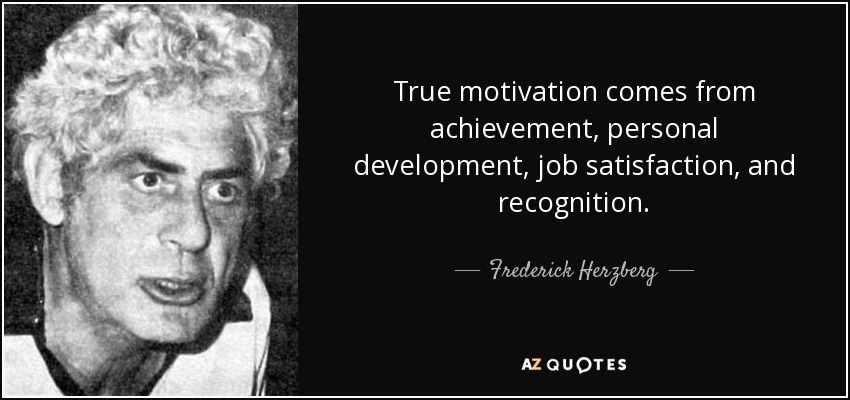
Ask most people what actually keeps them going at work past the paycheck, past the title, and you hear the same couple of things. They want to get good at something. They want their effort to land somewhere real: a customer helped, a colleague unblocked, a problem actually solved. They want the small daily pride of using their own judgment and having it count. These motivations are quiet and easy to overlook, but they are what people are really protecting when they worry about their jobs. The current conversation about artificial intelligence rarely speaks to any of it. It swings between panic and bravado. AI will replace us all, or those who learn to ‘leverage the tools’ will float above the rest, and ordinary workers who do not want to become overnight visionaries will be lost in the noise, simply hoping to keep doing useful, dignified work in a world where machines suddenly seem very good at being good enough. Reading a recent excerpt from a forthcoming book, What AI Reveals by Bob Hutchins, helped me name part of that unease. Hutchins describes what he calls the ‘industrial bargain‘: for much of the twentieth century, many of us accepted standardisation and compliance at work in exchange for a degree of stability, which included a paycheck, a fixed role, and a predictable ladder to climb. The bargain was never perfect or fair, but at least it was legible. You more or less knew what was expected of you if you wanted to stay employable. This idea echoes classic research by psychologist Frederick Herzberg, who set out to understand what actually motivates people at work. Herzberg found that factors such as salary, working conditions, and job security primarily prevent misery. The things that truly motivate us are different: meaningful tasks, recognition, and responsibility. Later summaries of his work make the same point: fixing hygiene factors like pay and policies can reduce dissatisfaction, but it does not create engagement on its own. People feel alive at work when they have some say, some ownership, and a chance to grow.
The modern industrial workplace often did the opposite. It was designed, through scientific management, to remove judgment from workers, define tasks narrowly so they could be performed by any interchangeable person, and replace intrinsic engagement with external rewards. In Herzberg’s terms, it maximised hygiene and quietly squeezed out motivators. Many people were, as Hutchins puts it, ‘contained but not flourishing‘: present, compliant, but rarely invited to use their full judgment or creativity. Long before AI arrived, global surveys were already finding that only a minority of employees described themselves as engaged at work.
AI now breaks this bargain. If you design humans to behave like reliable machines, and then you finally build actual machines that can perform standardised tasks faster, cheaper, and without fatigue, the machines will win that contest every time. The question becomes: what is left for us, and how do we grow into it?
Economist David Autor describes this by saying that AI ‘commodifies expertise‘. It allows people with moderate knowledge to produce work that, at least on the surface, looks like the work of a seasoned expert. A nurse practitioner with a sophisticated diagnostic assistant might make assessments that previously required a specialist; a junior developer with code‑generation tools might write software that previously required a senior architect.
At first glance, this seems like good news. Who wouldn’t want better tools in their hands? Many practitioners describe impressive gains when AI helps draft documents, analyze data, or suggest options. But as many authors point out, the real challenge is not whether AI can help produce these outputs, but whether the human using the tool can tell when it is wrong, incomplete, or dangerously out of context. Without that capacity, the apparent upgrade in performance is an illusion.
This creates what can be called a judgment gap: the distance between what AI can produce and what humans can responsibly sign their names to. The output sounds confident either way; the difference is whether someone can detect when confidence is misplaced. It shows up in small, everyday questions: Does this recommendation fit my patient, not just the average patient? Is this contract summary missing a risk that matters to my client? Does this logistics plan make sense for our local conditions, not just for a generic model? Anxiety often comes not only from Will AI take my job?, but from Will I still know what I’m doing when AI is in the loop?
In practical terms, this shifts the value of human work toward what Hutchins calls meta‑cognition: thinking about thinking, auditing the machine, interrogating its output. The tool can propose an answer, but someone still has to ask whether it fits the facts on the ground, the system’s constraints, and the profession’s ethics. That someone cannot always be a distant super‑expert available on demand. It has to be the ordinary worker, somewhere along the ladder. The question, then, is how we live and work in this new space, where our role is less to produce the first draft and more to decide what to trust.
The worrying part is what happens in the middle. This used to be the traditional training ground where people struggled through real tasks, made mistakes, got corrected, and slowly became trustworthy professionals. Economists and policy analysts have been warning for years that automation hits middle‑skill jobs especially hard: roles built around routine tasks that nonetheless allowed people to learn a craft on the job. Newer work on AI suggests a similar pattern may be emerging. Entry‑level positions still exist, but they increasingly expect communication, coordination, and problem‑solving from day one, while offering fewer straightforward tasks to practice on. That can mean a young nurse, warehouse worker, or junior analyst is expected to act as if they already have judgment, while having fewer chances to build it gradually.
This extends well beyond white‑collar offices. In logistics, manufacturing, services, and care work, many entry‑level jobs now run through digital systems that decide what needs to be done and when. As AI takes over more of the planning and decision support in these environments, workers risk spending most of their time checking screens rather than learning a craft. The danger is the slow erosion of the path by which someone becomes more than just labour.
For many, this feels like a double bind. On one side, we are told to embrace AI and use it to increase our productivity. On the other, we sense that if we rely on it too much, we may not develop the depth needed to remain employable in the long term. Few of us have the luxury to step outside of this tension. We still have deadlines, quotas, and supervisors who care more about today’s output than about our development. Any honest conversation about staying employable in the age of AI has to start from this reality, not from the fantasy of unlimited time to reinvent ourselves.
These tensions not only affect current workers; they also shape how we think about education and upbringing. If AI will be present throughout our children’s lives, it is tempting to frame preparation mainly in terms of ‘AI skills’: prompts, tools, maybe some coding. These are useful, but they do not address the deeper question raised by the judgment gap: how do we raise people who can live responsibly with systems that are often right, sometimes wrong, and always persuasive?
One answer is to treat judgment as a central educational goal, not a by‑product. That means giving young people repeated experiences where they must compare different sources, test claims against reality, and explain why they chose one course of action over another. It involves frustration: assembling things that do not work the first time, debugging a process, or debating a difficult decision. These are not just exercises in resilience; they are training in sensing when something “doesn’t add up,” even when a smooth interface says it does.

Another answer is to protect spaces where human meaning is visible. AI can generate text, images, and plans, but it does not have stakes in the outcome. Children and adults need to see that actions have consequences for real bodies, communities, and ecosystems. That can happen in many settings: caring for people, working with physical materials, participating in local decisions. The point is not to romanticise offline life, but to ensure that AI’s outputs are always tethered to lived reality. If we want future workers who can question AI responsibly, they need more than technical literacy; they need reasons to care about what is true.
Between the headlines about AI ‘ending all jobs’ and the ads promising that a 30‑day course will make you the most dangerous person in the room, it is easy to feel pulled apart. A lot of this content is designed to provoke fear or hype, not to help us think. It speaks to us as if we were just resources to be optimised, not as people trying to live sane, decent lives while the tools around us change. In that environment, keeping our judgment alive is not only a professional skill but also a way to protect our mental health. It lets us step back and calmly ask: what is actually changing in my work in my context, and what small, realistic steps can I take rather than reacting to every dramatic claim?
If the whole point of the industrial bargain was to produce standardised, compliant workers, then AI’s arrival is an uncomfortable chance to renegotiate that bargain. Hutchins notes that, starting from this logic, we call humans resources. The word has haunted us ever since. From a humanist perspective, the goal is not simply to make humans more competitive against machines, but to reaffirm that people are more than resources, even in highly automated environments.
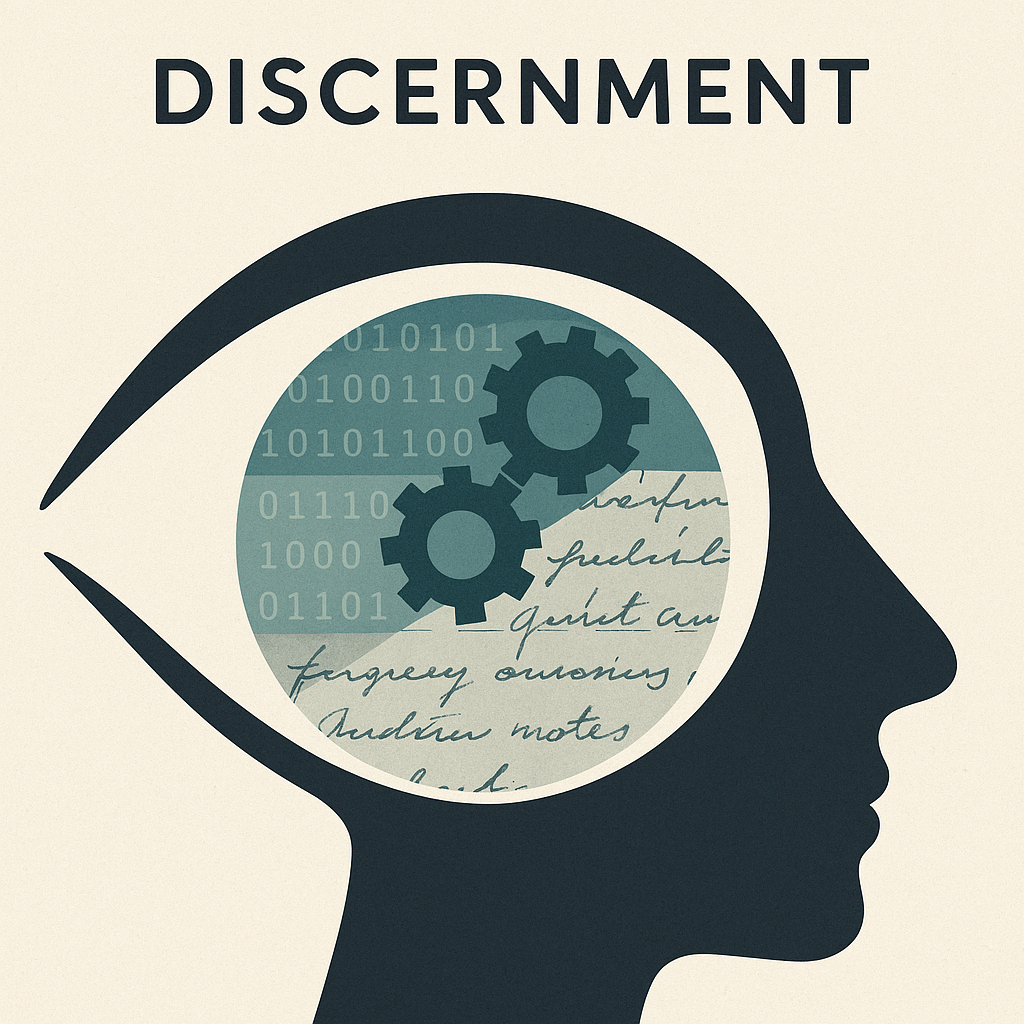
At an individual level, a modest upgrade might look less like chasing every new tool and more like cultivating a few durable habits: staying close to the real‑world context in your domain, practising explaining the reasons behind your decisions, and noticing when you are tempted to delegate judgment entirely to a system. These habits are possible in many jobs, even under constraints. They do not turn anyone into a superhero of the AI era, but they build the kind of discernment, the ability to judge what really fits the situation, that tools cannot replace.
At a collective level, organisations, unions, professional associations, and educators can choose to keep a training ladder open instead of letting AI eat the middle. That might mean designing roles where juniors still handle real, slightly messy tasks under supervision, even if a tool could do them faster; or setting aside time not just for learning how to use AI, but for reflecting on when not to use it. Some practitioners put it simply: AI can help us do things right, but it cannot tell us whether we are doing the right things in the first place. That higher‑level question, what is worth doing, for whom, at what cost, remains stubbornly human.
If AI exposes the cost of the industrial bargain, staying employable is only part of the story. The deeper question is what kind of judgment we continue to develop and what kind we quietly give up. Systems will keep producing answers. The real risk is that, over time, fewer people feel responsible for deciding whether those answers make sense. In that sense, the age of AI is both a technological challenge and a test of whether we are willing to remain participants in our work or slowly become its supervisors in name only.
Author: Slobodan Kovrlija