Frontier tech news from Singapore is no surprise. The city-state has become synonymous with cutting-edge digital tools. But the recent AI experiment by Singapore’s foreign minister, Vivian Balakrishnan, is different. In a 20-minute video, Minister Balakrishnan explains how he developed his own AI toolset, which he calls his ‘second brain’. It is a practical demonstration of what AI can do when it is treated not as a mysterious technology, but as a working instrument that can be shaped by anyone, including leaders and diplomats.
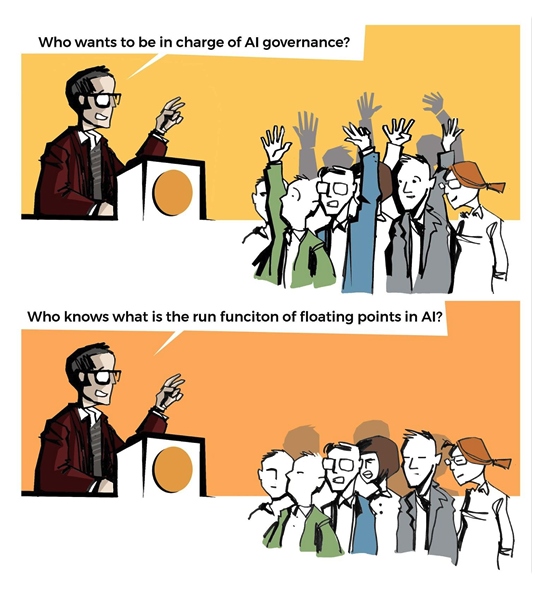
More importantly, by developing an AI diplomatic tool, Singapore’s top diplomat gets new insights into the AI geopolitical context in which he operates, and AI as a topic that he has to negotiate on behalf of Singapore. This holistic approach to AI makes Singapore’s experiment, so far, the leading case of AI diplomacy in 2026, as analysed below. 𝐘𝐨𝐮 𝐜𝐚𝐧𝐧𝐨𝐭 𝐠𝐨𝐯𝐞𝐫𝐧 𝐭𝐞𝐜𝐡𝐧𝐨𝐥𝐨𝐠𝐲 𝐲𝐨𝐮 have only been briefed on. Vivian Balakrishnan AI cannot be governed only through second-hand knowledge. Diplomats negotiating AI rules, standards, and safeguards need direct experience of how these systems work, what they can do, where they fail, and how they can be adapted. Not everyone needs to become a programmer. But everyone involved in AI governance should understand the technology well enough to ask pertinent questions, challenge assumptions, and identify realistic policy options. The Singaporean minister’s example can help overcome the current gap between high interest in AI governance and low understanding of new technology, as illustrated below. This gap can be overcome by programmes such as a VIP AI Apprenticeship: a customised programme for ministers, parliamentarians, ambassadors, and negotiators to learn AI by developing AI, as the Singaporean top diplomat is doing. (See: Diplo AI Apprenticeship).
Minister Balakrishnan is not a professional software engineer. His original background is medicine; he is an eye surgeon. Yet, as a busy minister, he has been able to develop a sophisticated AI toolset for his own work. Developing such AI tools is possible as AI is becoming a commodity: increasingly available, adaptable, and usable by people who understand their professional needs better than any external developer could. For diplomacy, this opens a new possibility. Instead of waiting for large, centralised systems to be designed and deployed top-down, diplomats could begin creating tools that reflect their workflows: reporting, preparing briefings, organising institutional memory, tracking negotiations, or analysing policy documents. Here, diplomatic institutions face a critical organisational challenge: how to provide diplomats with an ‘AI sandbox’ where they can experiment freely with new tools and avoid the risky practice of shadow AI, in which they use commercial platforms for professional purposes? The commodification of AI also shifts diplomatic priorities. Instead of chasing the latest LLMs (see the AI Pareto Paradox below), which are becoming less relevant to overall AI, countries – in particular small ones like Singapore – should focus on deploying new technologies. Practically speaking, this can help them focus limited diplomatic resources to negotiating standards and practices for the use of AI in education, trade, and security. The Singaporean minister emphasises the effective use of structured data, rule-based systems, knowledge graphs, and wiki documents. The effectiveness of his tool is more linked to a smart combination of ready-made tools than to a trillion-parameter, powerful LLM. Much of today’s AI debate is dominated by LLMs. They attract most of the investment, media attention, and policy focus. Yet, many useful AI applications do not require unlimited generative capability. In Diplo’s work, we describe this as the AI Pareto paradox: 80% of resources and attention often go to LLMs, while they may deliver only 20% of practical impact in specific professional settings. Useful AI in diplomacy may come from combining LLMs with structured data, rule-based systems, expert workflows, search tools, databases, and human judgement. The real value lies not in asking a chatbot to “write something”, but in designing systems that support how diplomats think, remember, compare, and decide. Many of the tools used in Singaporean experiments are deterministic (e.g., databases, knowledge graphs). Before the latest generative AI boom, many AI systems were deterministic and rule-based. Expert systems have been encoding human expertise into structured rules and decision paths. For a while, they were considered outdated. Now that we are hitting the limits of LLMs and experiencing hallucinations due to their probabilistic nature, deterministic AI is gaining new relevance. In diplomacy and policy work, deterministic AI can help codify knowledge in focused domains. It can increase accuracy, reduce hallucinations, and make outputs more traceable. For areas where accuracy matters—treaty obligations, protocol rules, sanctions regimes, institutional procedures, or negotiation history—deterministic systems provide precision that LLMs cannot. The future of AI in diplomacy lies in an effective interplay between LLMs and rule-based AI models. The Singaporean experiment follows the global trend of open-source AI, which offers full control, transparency, and the flexibility to adjust. Open-source LLMs and AI platforms created space for bottom-up AI development, enabling anyone to build an AI tool tailored to specific needs. Open source prevents lock-in to commercial platforms and enables users to switch to new AI platforms and tools that emerge rapidly. In addition, fully open-source models, such as Swiss LLM Apertus, can help preserve the knowledge generated by our interactions with AI: with each question we ask, we pass our knowledge to AI platforms. For diplomatic service, open-source AI platforms provide a toolkit for developing in-house AI that is air-gapped from external systems, including the internet. Thus, customised open-source solutions can provide diplomatic services with a high level of security and institutional autonomy. Open source AI is becoming a diplomatic topic as more and more countries ask for openness and transparency in the development of AI models. The Singapore example shows that AI tools do not necessarily compromise security when properly designed to distinguish between open and confidential data. A lot can be achieved by using AI to analyse and contextualise open data and information. For confidential data, AI can be developed in ways that keep control closer to the institution and avoid unnecessary exposure of sensitive information. Diplomatic services are, by design, careful about the security and confidentiality of their information and communication. Security arguments are often used to delay or stop AI projects. However, treating AI as inherently insecure is misleading. It can be overcome by, firstly, distinguishing between open and closed systems. Singapore’s minister uses open data. The security of a closed AI system is as good as that of an email or any document. Architects of these systems should be careful about the services used. For example, an AI system can be properly protected, but it may use third-party chunking/embedding services beyond security limits that could leak confidential information. For complete security, diplomatic services can have an air-gapped AI system without any link to the internet or commercial platforms. Perhaps the most powerful implication of Singapore’s experiment is the high potential for democratic decentralisation of AI. AI does not have to arrive only through large, centralised procurement projects. It can also emerge from the edge of the system: from individual diplomats, departments, missions, and policy units experimenting with tools that solve concrete problems. This bottom-up approach can make AI more practical and more human-centred. The people who know the work best can help shape the tools. Bottom-up AI developed on the edge has far-reaching practical and policy implications. It enables citizens to develop personal AI—what a Singaporean minister called a “second brain”. If AI is an extension of our own knowledge, many current debates on AI governance become less relevant. If we are biased, our AI will be biased. If we hallucinate, our AI will hallucinate too. If we misuse AI and break the law, that misuse extends to our AI as well. Bottom-up AI can preserve AI-generated knowledge close to the citizens, communities, and countries where it originates. As shown in the Singaporean example, bottom-up AI is technically feasible, financially affordable, and ethically desirable. Singapore’s chief diplomat outlined four geopolitical complications in the development and use of AI that may affect open and decentralised AI developments. The first is commercialisation. As the AI market race accelerates, open and flexible experimentation may be increasingly shaped by vendor interests and platform lock-in. The second is national security. Governments increasingly treat AI as a strategic capability, not only as a productivity tool. This will alter what can be shared, procured, deployed, and trusted. The third is cybersecurity. AI systems are becoming both tools for defence and targets for attack. Governments need to protect their data, models, prompts, workflows, and institutional knowledge. The fourth is superpower contestation. AI development is already embedded in geopolitical rivalry. Standards, chips, models, cloud infrastructure, and data governance are all becoming part of global power politics, especially between China and the USA. By understanding what AI actually is, diplomats and negotiators can address geopolitical issues in an informed way. Otherwise, abstract and almost mysterious AI becomes very tangible. In this way, countries can position themselves in the emerging AI geopolitics. For example, based on the minister’s speech, Singapore will lean more towards deploying AI than racing to develop cutting-edge large language models. These types of strategic choices will have far-reaching impacts on a country’s future development and its position in international relations.
Even with an AI-enlightened minister, deployment across an institution is not straightforward. AI impacts organisational culture, tacit knowledge, and career progression, which are important factors in individual motivation in a highly hierarchical diplomatic profession. If mainly human-related aspects are sorted out, AI can have a massive impact in diplomacy, which is a text-centred activity. AI can help connect fragmented knowledge across departments, embassies, archives, personal networks, and individual memories. The real test will be whether an entire diplomatic system can develop many connected, secure, and useful “second brains”. At Diplo, we are experimenting with the concept of cognitive proximity: among humans, and between humans and machines. As Singapore leads the race for the 2026 AI Diplomacy Award, one lesson echoes clearly: diplomats should not wait for AI to happen to them. They should start building it, testing it, questioning it, and governing it from experience.

1. Diplomats who negotiate AI should understand AI
Relevance

2. AI is becoming a commodity no longer reserved for technical elites
Relevance
3. Realistic use of LLM and the AI Pareto Paradox
Relevance
4. The return of deterministic AI
Relevance
5. Open source as a diplomatic asset for AI
Relevance
6. AI can be secure and safe
Relevance
7. Bottom-up AI and decentralisation
Relevance
8. AI geopolitics
Relevance
What comes next