
On 15 May 2026, Pope Leo XIV issued Magnifica Humanitas: On Safeguarding the Human Person in the Time of Artificial Intelligence, his first encyclical, challenging the technocratic paradigm, the concentration of power in the hands of a few tech giants, and the transhumanist agenda promoted by Peter Thiel and other tech figures. The Pope’s encyclical triggers tensions between the hard powers of AI companies and the soft power of the Vatican, leading 1.3 billion Catholics worldwide. On the power dynamics, one parallel to be made is to Stalin’s dismissal of the Vatican in the 1940s: ‘Oho! The Pope! How many divisions has he got?’1Joseph Stalin said this sarcastically to Pierre Laval in 1935, when Laval asked whether he could do anything with Russian Catholics to help win the Pope’s favour. The remark was quoted in the first volume of Winston Churchill’s The Second World War (1948), in the context of countering the increasing threat of Nazism. A few decades later, the Catholic Church played a major role in the peaceful collapse of the communist system that Stalin designed. Soft power, it turned out, could outlast and outmanoeuvre military might and other forms of coercion.
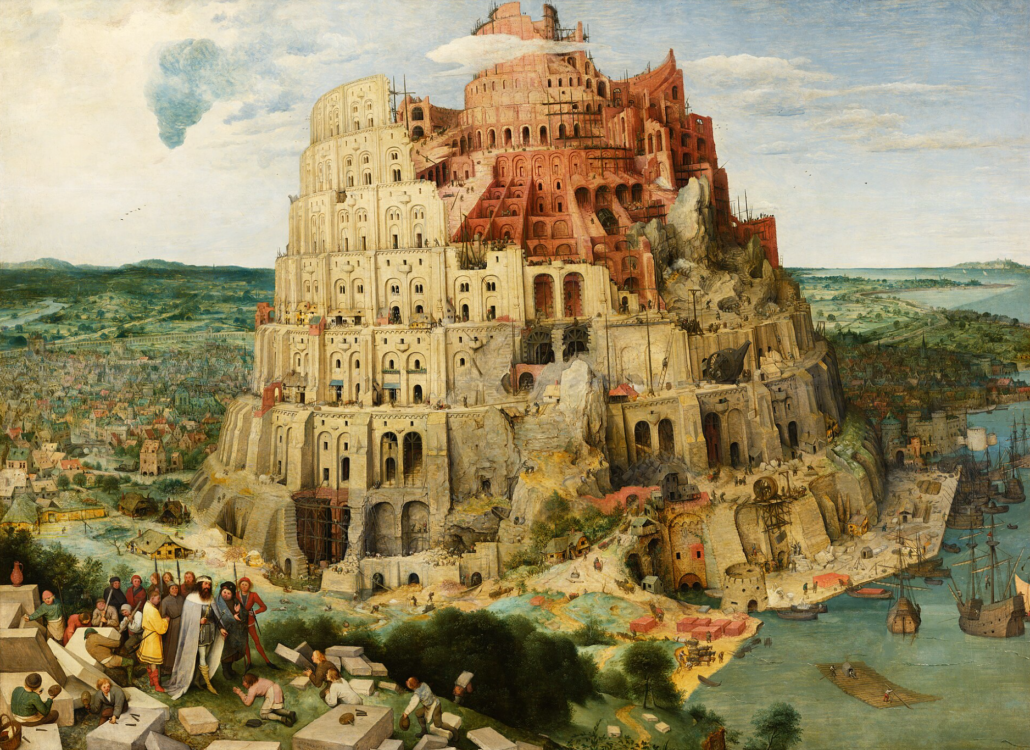
Will the hubris of power repeat itself in the case of AI, as it did with Stalin and many others across the Catholic Church’s long history? Time will tell. Yet, there is room for optimism. During the presentation of Magnifica Humanitas, the Pope called on tech companies and others to build AI jointly as an enabling and powerful tool for humanity. The encyclical’s proposals for achieving this should be carefully studied, as the Vatican has a unique ‘cognitive luxury’ of viewing current developments from a longer-term perspective, transcending contemporary chrono-narcissism. Anchored in millennia of history, the encyclical provides an important antidote to the current TINA (There Is No Alternative) AI discourse: the race cannot be slowed, geopolitical competition cannot be escaped, and humans must simply follow. The encyclical rejects this inevitability. It insists that technological futures can and should be shaped by our choices. Technology is not destiny. It is a field of moral, political, and spiritual responsibility. The Magnifica Humanitas will be (mis)read and debated intensely in the coming years. Its historical significance prompted me to examine the text more deeply from philosophical, technological, governance, security, and diplomatic perspectives. The encyclical’s arguments are framed around two powerful metaphors: the Tower of Babel and the walls of New Jerusalem. The Tower of Babel symbolises technological power without humility. It is the image of humanity reaching upward through ambition, control, and self-exaltation, only to produce fragmentation, confusion, and collapse. In the AI age, the tower is a warning that a few companies and technologists are building systems that reshape language, knowledge, work, security, and even human identity, while the wider public is left to adapt after the fact. The Walls of New Jerusalem metaphor offers a different vision. It is built piece by piece, through cooperation, solidarity, dialogue, and responsibility. Furthermore, it requires diplomacy rather than domination, patience rather than acceleration, and the common good rather than the race for supremacy. Ultimately, Magnifica Humanitas can be boiled down to a choice between two metaphors: Babel and Jerusalem. It is not a single big decision, but a series of small ones taken every day by all of us, from developers to AI users. Many of them are tacit and uninformed choices. The Pope’s encyclicals warn us about sleepwalking into Babel and offer guidance to reaching Jerusalem by drawing on the cognitive, emotional, and spiritual strengths that define us as human beings. Magnifica Humanitas: On Safeguarding the Human Person in the Time of Artificial Intelligence is the first encyclical issued by Leo XIV, outlining his views on AI and other critical issues of our time. For 1.3 billion Catholics and the wider global community, the encyclical carries strong symbolism. It was presented on 15 May, exactly 135 years after Pope Leo XIII issued Rerum Novarum. Much time has passed, but today’s challenges remain similar to those of 1891 and the height of the Industrial Revolution: how to ensure that technology supports human dignity and humanity as a whole. This long document of 42,586 words is built around a dilemma between two metaphors and two choices humanity must make in dealing with AI: the Tower of Babel and the Walls of New Jerusalem. The first chapter provides the theological and historical context, centred on the Catholic Church’s social doctrine. Its language and style suggest that this part is aimed mainly at Catholic and theological audiences. Building on this theological foundation, the second chapter offers a more accessible narrative through a cognitive toolkit for analysing the impact of AI. It begins with the centrality of human embodiment and human dignity, applied through the principles of the common good, the universal destination of goods, subsidiarity, solidarity, and social justice. Integral human development brings these elements together into an overall analytical approach. The third chapter turns to technology itself, including the need for transparency, accountability, and responsibility throughout the full cycle of AI development and deployment. Here, the Pope questions transhumanism and posthumanism as technologically driven visions that challenge the purpose of humanity and the role of human beings. The fourth chapter examines AI’s impact on society, including democracy, education, work, and the economy. In this section, the Pope uses strong language to describe the risks of technology, including new forms of slavery and colonialism. The fifth chapter challenges the TINA (there is no alternative) view of the AI power race, militarisation, and conflict. The Pope reminds us that history shows humanity’s capacity not only to fight but also to engage, negotiate, and coexist. He covers a wide range of issues, from the regulation of killer robots and the need to disarm AI, to healthy realism and the need to change the narratives that are pushing us towards war and potential catastrophe. The encyclical argues that existential risks are not limited to the possibility of AI taking over humanity. They also arise from AI’s cumulative impact on education, jobs, war, and human agency. It stresses the critical role of diplomacy and negotiation as ways to build a New Jerusalem together, as Nehemiah did, instead of sleepwalking into a new Tower of Babel with all the destruction it may bring. In the rest of the text, you can find the gist of my analysis of Magnifica Humanitas, which will be expanded in the coming days. To receive in-depth analysis, you can register here: Registration form Note: By clicking on the Submit button, you are agreeing to our Privacy policy. In software terminology, the Pope’s encyclical aims to fix the ‘operating system’ of humanity by getting back to the basic code set in the wider ‘Axial Age’ when Hinduism, Buddhism, Taoism, Judaism, Christianity, and later, Islam outlined answers to four core questions: who are we, how can human life acquire meaning, how do we know and learn, and what does it mean to live an ethical life? These core philosophical and religious traditions made human beings aware of themselves as moral, spiritual, rational, and responsible beings. Since the Axial Age, humanity’s ‘operating system’ has been upgraded and patched via the Enlightenment, EspriTech de Geneve, the Vienna Thinkers, as visually summarised below. The evolution of thinking described above is currently challenged by questions about humans and their core identity. Transhumanism and posthumanism, which are explicitly criticised in Pope’s encyclical, are based on the idea that humans can and should be ‘optimised’ through AI, bioengineering, and other technologies. While these techno-promises are often presented as simple tools that will cure diseases or make us work less, they ultimately question the central role of humans set millennia ago by the main thinking and religious traditions of the Axial Age. Magnifica Humanitas focuses on this key dilemma, removing all trappings of techno, business, and other narratives that dominate our communication space. It also calls to revisit the core of humanity’s ‘operating system’ centred around the life and dignity of humans arguing that humans should not be ‘optimised’ in the same way as technologies. The antidote to the drive towards optimisation of humans and, ultimately, triggering anthropological regression is the fundamental truth that human existence and dignity are neither acquired nor earned, nor in need of justification. With a call to fix the ‘operating system’ of humanity by promoting values of human existence and dignity, the encyclical creates space for a historical coalition, bringing together ‘Axial Age’ religious, spiritual, and philosophical traditions. The encyclical does not see technology, in itself, as a force antagonistic to humanity. It acknowledges that it has significantly improved our living conditions throughout history. The encyclical warns about the danger of considering AI systems as neutral and objective: Technology is never neutral, because it takes on the characteristics of those who devise, finance, regulate and use it.2A paraphrased restatement of Melvin Kranzberg’s First Law of Technology. Kranzberg, a historian of technology at Georgia Tech, famously declared in 1985: ‘Technology is neither good nor bad; nor is it neutral.’ It dives even deeper by arguing that: Ethical discernment cannot be limited to asking whether we are using a system for good or bad purposes; it must also examine how that system is designed and what vision of the human person and society is embedded in the data and models that guide it.3This statement was made by Pope Francis in Considerations for an Ethical Discernment Regarding Some Aspects of the Present Economic-Financial System, Vatican, 2018. Even if we intend to use AI for good, we may be architecturally prevented from doing so, as: …every technical tool embodies choices and priorities through what it measures, ignores and optimises, and how it classifies people and situations.4A modern elaboration of Ursula Franklin’s principle that ‘every tool shapes the task.’ It captures her view that technologies embody human priorities and values, not just technical functions. On an important issue of ‘alignment’ of AI with human values, the encyclical poses the critical question with whose values AI should be aligned with. So far, it is the ethics of those who develop and own AI systems. What about those who use AI and are exposed to its impact? On AI governance, the encyclical offers clarity. It challenges the technocratic paradigm, in which governance is treated as an expert exercise focused mainly on standards, risk management, and efficiency. Instead, it argues that AI governance must begin with human dignity and the common good. This does not mean vague moral language. The encyclical points to concrete governance topics: data ownership, algorithms, digital platforms, labour, credit scoring, privacy, bias, cybersecurity, taxation, intellectual property, child protection, information integrity, supply chains, and public services, among others. AI governance cuts across a wide range of social and political issues and spaces. As an AI governance method, the encyclical proposes the principle of subsidiarity, which holds that decisions about AI should be made as close as possible to those affected. Communities should not merely be consulted after rules and platforms have been set elsewhere. They must be able to shape, challenge, and correct the systems that impact their lives. This resonates strongly with the multistakeholder tradition in internet governance. States, companies, technical communities, civil society, schools, universities, local communities, and international organisations all have roles to play. No single actor can legitimately govern AI alone. The encyclical challenges both corporate monopoly and state-centric control. It calls for governance that is distributed, accountable, participatory, and oriented towards human advancement. One of the encyclical’s most critical contributions is its renewed grounding of human rights to protect our humanity in the AI era. Here, the encyclical points to a paradox of our age: human rights are widely formally proclaimed, yet rapidly eroded by, among other things, technological progress. Through profiling, manipulating and overall technological optimising, people are increasingly treated as data points and parts of algorithmic patterns. In addition, AI intensifies these risks by reducing complex human identity to a single dimension of intelligence, productivity, behaviour, probability, or economic value. But the human person cannot be captured by any one metric. For example, intelligence itself, when absolutised, can overshadow affection, will, commitment, memory, conscience, relationship, and spiritual life. This is why the right to ‘human imperfection’ and not to be optimised by technology will become even more relevant in the coming years. In a world of continuous scoring, optimisation, and prediction, people need space to fail, change, learn, repent, and begin again. Human freedom requires opacity, interiority, and time. A striking concept in the encyclical is the call to ‘disarm AI’. This is not limited to the regulation of autonomous weapons or military systems, although those are urgent concerns. It is a wider call for cognitive, economic, and political disarmament. AI is becoming an instrument in geopolitical rivalry, commercial dominance, surveillance, propaganda, and social control. The encyclical challenges the assumption that this race is inevitable. It calls for AI to be developed as an enabling tool for humanity rather than as a weapon of power and war. This is where the Pope’s critique of war becomes especially relevant. The encyclical rejects the normalisation of ‘just war’ narratives that dress geopolitical ambition in the language of necessity or justice. It argues that the traditional just war framework has too often been used to justify violence rather than prevent it. Against this, the encyclical places diplomacy at the centre of human survival. Dialogue is not a weakness. Negotiation is not naivety. Diplomacy is one of humanity’s highest civilisational achievements because it proves that conflict is not destiny. Slavery and colonialism should belong to the past, yet both are reappearing in digital forms. The digital economy depends on the hidden labour of millions of people who label data, moderate content, train systems, and absorb disturbing material under precarious conditions. Many are young, underpaid, and invisible. Their work powers the illusion of seamless automation. AI also risks deepening human trafficking, sexual exploitation, and other forms of coercion through digital networks. The line between disrespect for human dignity and new forms of slavery is becoming increasingly blurred. Digital colonialism is another concern of the encyclical. Colonial powers no longer need to control physical territory. They can appropriate data, shape markets, control infrastructures, and extract value from human lives transformed into exploitable information. Health data is especially sensitive. Those who control the health data of entire populations can and will shape the future of medicine, investments, insurance systems, and public priorities. A truly post-colonial digital order would return agency to individuals and communities. It would give people not only access to their data but meaningful control over how that data is used, by whom, and for whose benefit. Here, the Vatican’s historical wisdom comes into play. The Pope questions the naive view that we are inevitably prone to conflict and wars: History does not appear solely as a record of human violence but also as evidence that humanity is capable of creating institutions that protect our shared life.5Pope Francis also expressed this view in his encyclical Fratelli Tutti, Vatican, 2020. The history of humanity is not only a history of wars. It is also a history of treaties, institutions, humanitarian law, human rights, peace movements, and courageous individuals who chose engagement over destruction. The encyclical lists some recent diplomatic achievements, from the establishment of the International Committee of the Red Cross in 1863, to the United Nations in 1945, and the adoption of the Universal Declaration of Human Rights in 1948, and the Refugee Convention in 1951. In the AI age, this diplomatic inheritance must be renewed, particularly by strengthening multilateral institutions. Risk has been central to the AI debate. A lack of understanding of technology and media hype led to significant mass confusion, including ignoring existing exclusion risks while overemphasising existential risks. Magnifica Humanitas provides an informed and impactful survey of AI risks. On existential risk, the encyclical avoids the typical narrative that the artificial general intelligence (AGI) or super-intelligence will take over humanity. Existential risks for humanity may happen more gradually and not necessarily by technology itself, but by those who own and run AI. On exclusion risk, the Pope warns against the monopoly of a few and the exclusion of many in the AI domain. Exclusion driven by monopolies takes epistemic, economic and political form: When such power is concentrated in the hands of a few, it tends to become opaque and evade public oversight, increasing the risk of distorted forms of development that give rise to new dependencies, exclusions, manipulations, and inequalities. The encyclical argues that control is exercised not only through explicit prohibitions but also through the architecture of visibility: what is amplified or rendered invisible, what is rewarded or penalised, ultimately shapes opinions and choices, fostering conformity and self-censorship. On existing risks, the encyclical provides in-depth analysis of the impact of AI on jobs, the economy, disinformation, and education, to name a few. The Pope calls to ‘disarm words.’ Most wars are preceded by wars of words. In particular, dehumanising language prepares the ground for violence. AI plays a critical role in shaping culture as a generator of text, video, and other means of communication. The encyclical, therefore, calls for renewed attention to truth, dialogue, and the moral ecology of language. AI poses the main risks of generating synthetic narratives, shallow persuasion, and automated distortion. The challenge is not only misinformation. It is the gradual erosion of shared reality. Magnifica Humanitas places great emphasis on education in the AI era, in line with the Catholic Church’s long teaching tradition. The encyclical identifies a key tension between the rapid access to information in the digital age and the inherently slow nature of learning. Information can be delivered instantly. Knowledge – and even more so wisdom – require time. Schools and universities are not prepared to address the tension between AI technology and human learning. For example, they have to find new ways to nurture storytelling as traditional essay writing is challenged by AI technology. The purpose of writing was never only to produce text that AI can produce quickly. Through writing, we form thought, judgement, and critical thinking. Families also need support in their educational role as well. The encyclical rightly warns against shifting the whole burden of digital protection onto parents while platforms and service providers remain largely unaccountable. Children need stronger digital safeguards, including age-based limits on social media use, protection against exploitation, and regulation of harmful digital environments. Schools must regain their role as places where young people learn relationships, critical thinking, patience, and values. The encyclical also reminds us that nothing in the digital world is immaterial or magical. AI depends on physical infrastructures: data centres, energy grids, minerals, water, devices, cables, and supply chains. Current AI systems require enormous amounts of energy and water and place growing pressure on natural resources. The environmental cost of AI is therefore not external to the debate. It is part of the moral assessment of the technology. A technology that claims to advance humanity cannot be evaluated only by speed, accuracy, or profitability. It must also be judged by its impact on the planet, on vulnerable communities, and on future generations. The historic importance of Magnifica Humanitas lies in its attempt to shift the AI debate from technical management to civilisational reflection. It challenges the concentration of power in a few companies. It questions transhumanist and posthumanist narratives that treat the human person as obsolete or upgradeable. It insists that AI governance must be rooted in dignity, subsidiarity, solidarity, justice, and the common good. It provides new perspectives on the risks of digital slavery, colonialism, militarisation, manipulation, and anthropological regression. Most importantly, it restores moral agency. Metaphorically speaking, we are not condemned to build a Tower of Babel. We can choose to build the walls of the new Jerusalem. The future of AI should not be decided solely in laboratories, boardrooms, or military planning centres. It should also be decided in schools, parliaments, churches, international organisations, families, local communities, and diplomatic negotiations. It should be shaped by the stories we tell, the limits we accept, the rights we protect, and the forms of power we are willing to challenge. The age of AI is no exception to the oldest human question: what are we building, and who are we becoming as we build it? The choice between the construction of the Tower of Babel and rebuilding the Walls of Jerusalem begins within and with each of us.
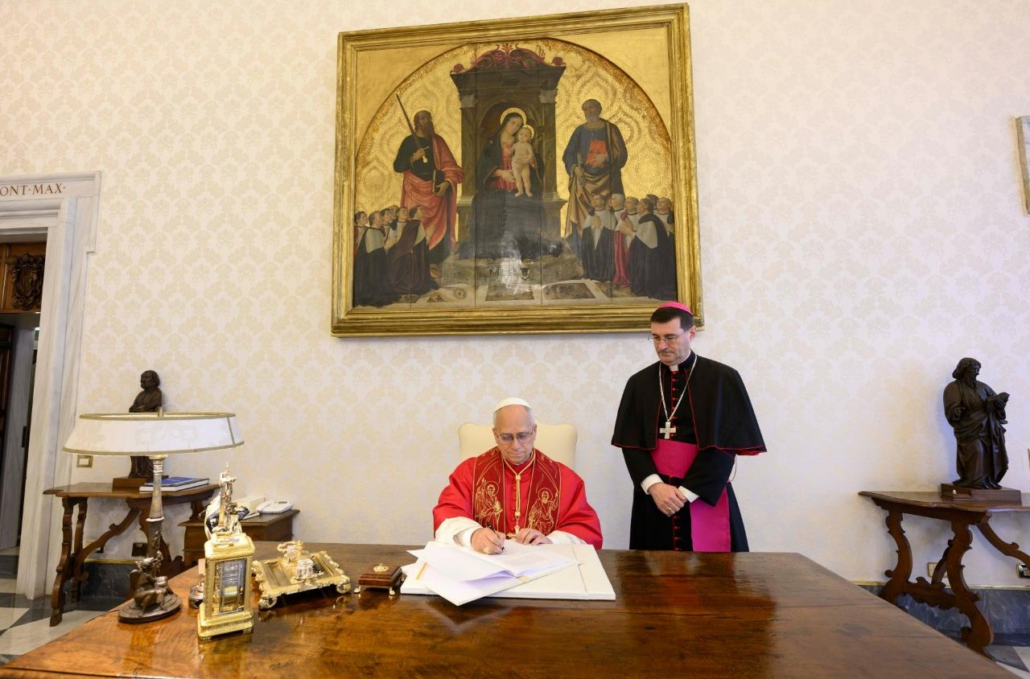
The Tower of Babel or the Walls of New Jerusalem?
How do we fix the ‘operating system’ of humanity?

Technology is not neutral
Clarity on AI governance and accountability
A fresh look at human rights
Disarming AI
Digital slavery and colonialism in the AI era
From the culture of power to a culture of diplomacy
How can we deal with AI risks?


Language and culture in the AI era
Education in the age of immediacy
The impact of AI on nature and the environment
Why does Magnifica Humanitas matter?

_-_Google_Art_Project_-_edited.jpg)