
The 2026 edition of the World Summit on the Information Society (WSIS) Forum took place on 6–10 July 2026 in Geneva, Switzerland. The event was co-hosted by the International Telecommunication Union (ITU) and the Swiss Confederation, and co-organised by ITU, the United Nations Educational, Scientific and Cultural Organization (UNESCO), the United Nations Development Programme (UNDP), and UN Trade and Development (UNCTAD), in partnership with over 50 other UN entities.
The forum serves as a mechanism for reviewing, gathering multistakeholder input, and advancing WSIS action lines. In the follow-up to the WSIS+20 review by the UN General Assembly, the event is also intended to support member states as they begin implementing commitments set out in the resolution adopted in December 2025. For more information, please visit the official event web page.
Diplo and GIP participated in the WSIS Forum in various ways, co-organising a session, having a booth at the venue, and providing just-in-time reporting via the Digital Watch observatory.
Just-in-time reporting
As in previous years, the GIP Digital Watch observatory provided just-in-time reporting from the WSIS Forum.
Bookmark the Digital Watch dedicated page or download the Dig.Watch News+ app to stay up-to-date with our session reports.
Our session at WSIS Forum 2026
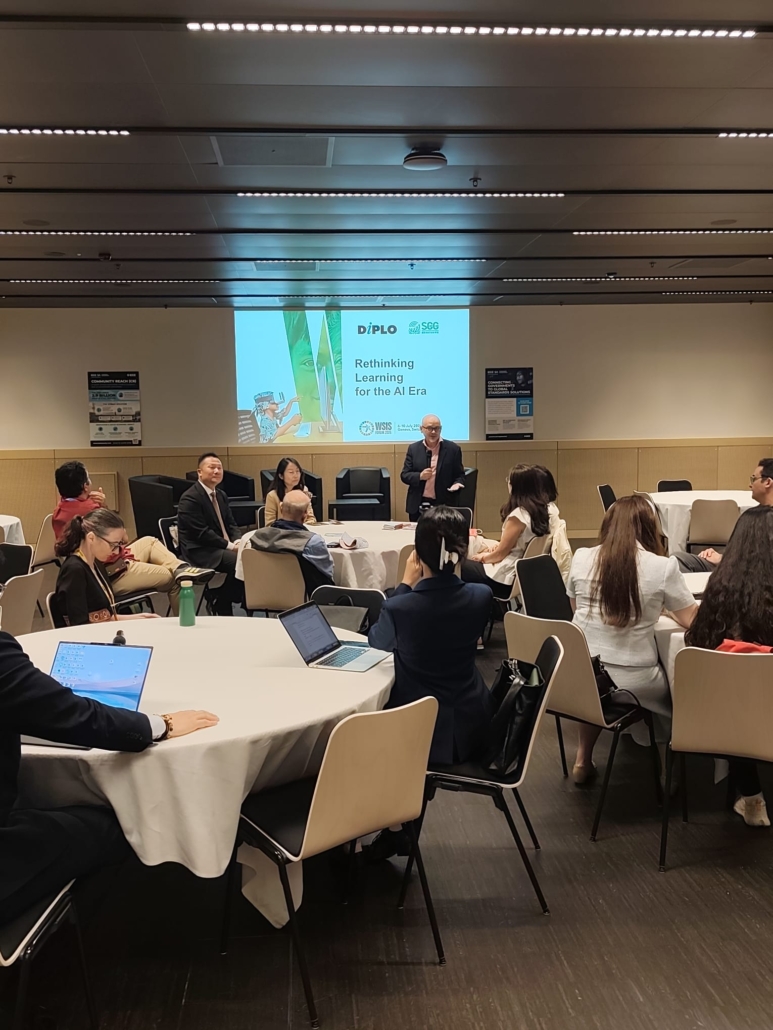
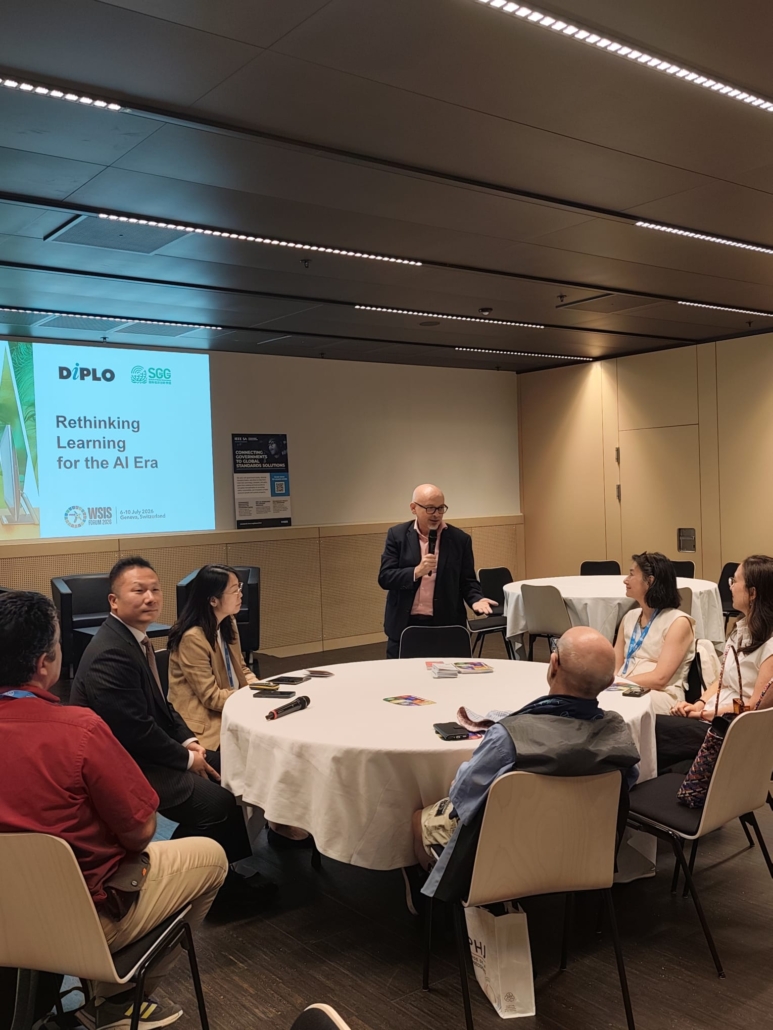
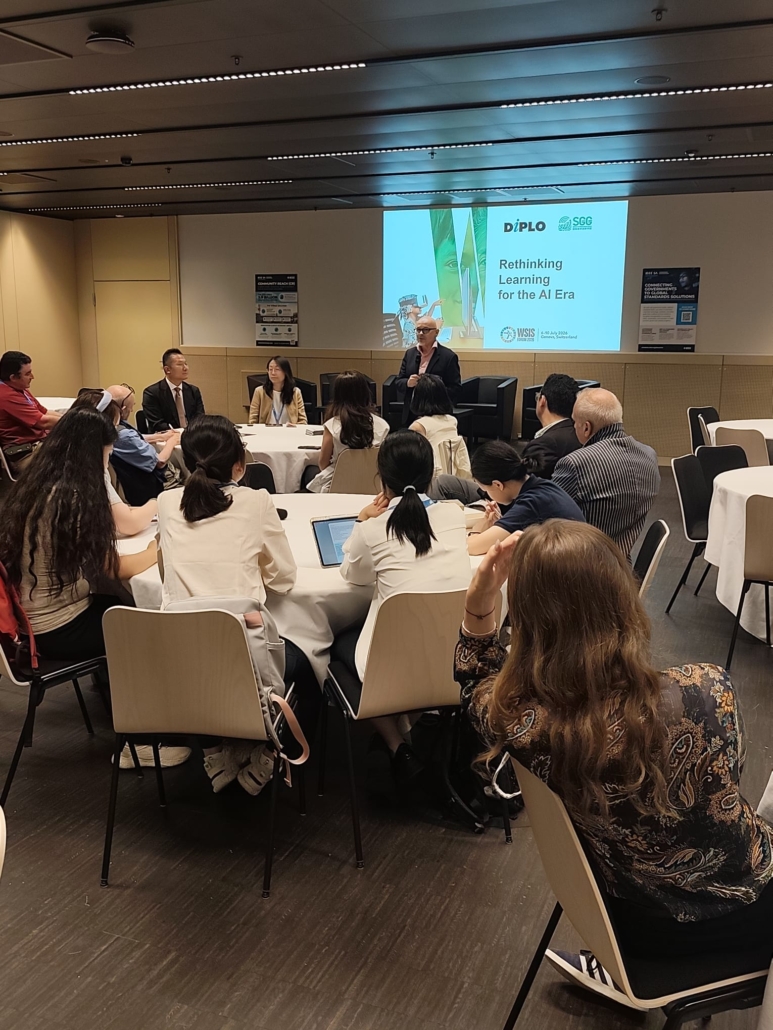
Session 250: Rethinking learning for the AI era
Thursday, 9 July, 17:00 CEST (15:00 UTC) | Co-organised by Diplo, the Geneva Internet Platform, and the Beijing Institute of Technology | Geneva and online | Register at the official session page
The session explored practical approaches for learning in the AI era. Drawing on Chinese and European educational traditions, the discussion will address four themes:
- Learning in the age of AI: How AI is transforming knowledge production, teaching practices, and learning processes, and what this means for how knowledge is created, thought, and understood.
- Reimagining the role of educators and institutions: Why and how education must shift from knowledge transmission to mentoring and facilitation, alongside redesigned curricula and assessment practices better suited for the AI era.
- AI literacy through AI apprenticeships: How learning-by-doing approaches, including the development of AI tools, can help learners understand how AI systems work and critically assess their outputs and impacts.
- Learning through narrative and dialogue: How storytelling can structure knowledge and inquiry, while methods such as hypertext annotation and AI-supported personalised learning enable dialogue, reflection, and mentoring-style learning experiences.
In line with para 85 of the WSIS+20 outcome document, which calls for international partnerships on AI capacity-building, the session also examined how cooperation between different educational traditions can support innovative models of education and training.
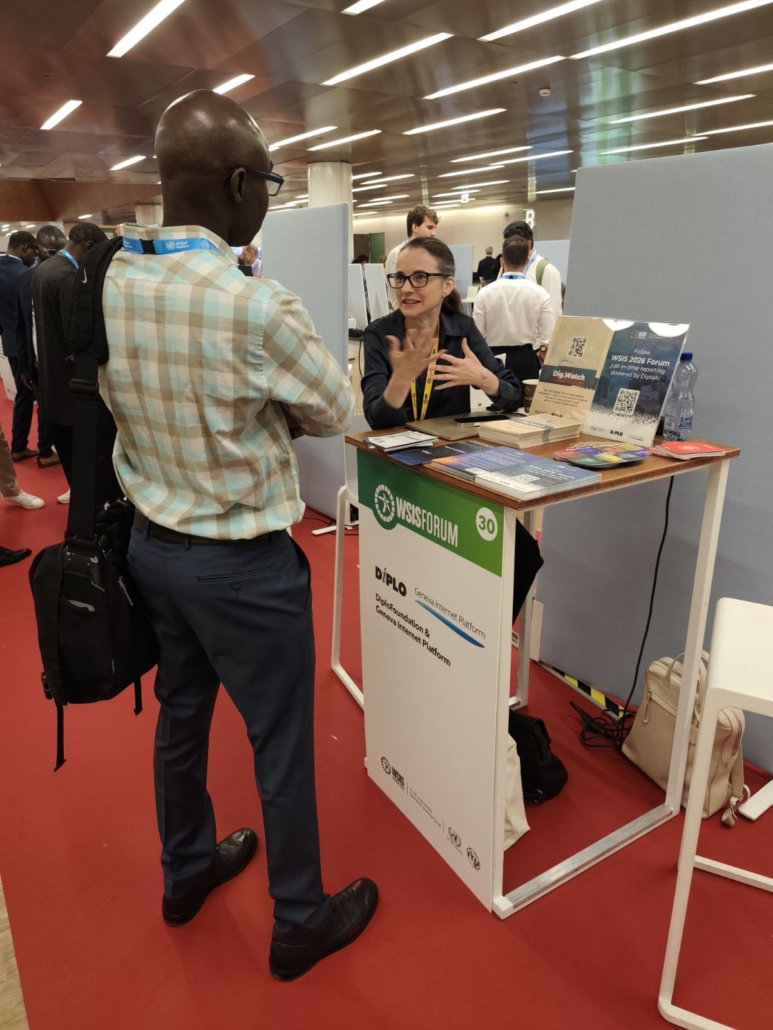
Diplo/GIP booth
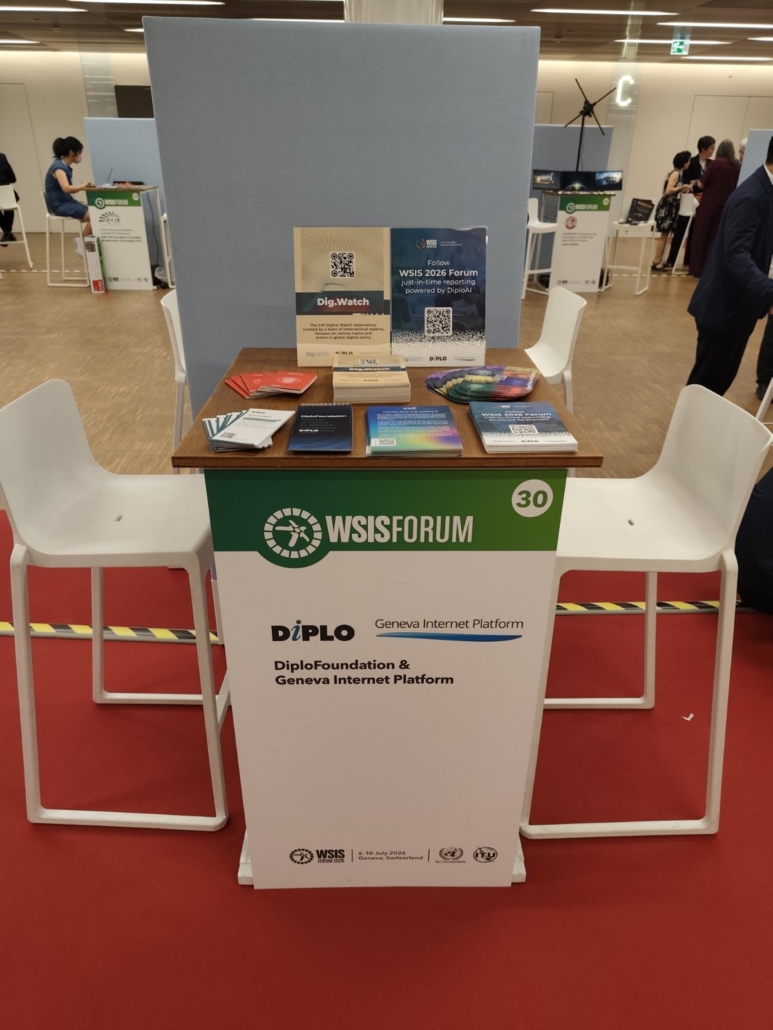
If you are attending the event in Geneva, make sure to drop by our Diplo and GIP booth.
We will showcase some of our publications and initiatives, and we look forward to engaging with you.
Related actors:
Related people: