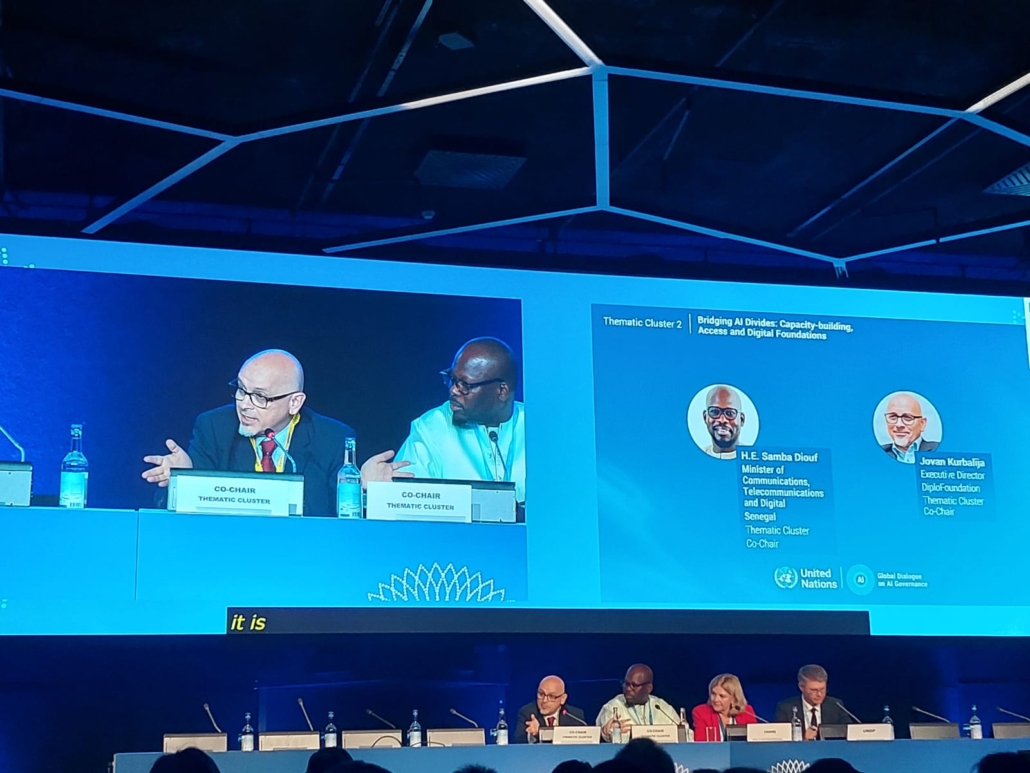
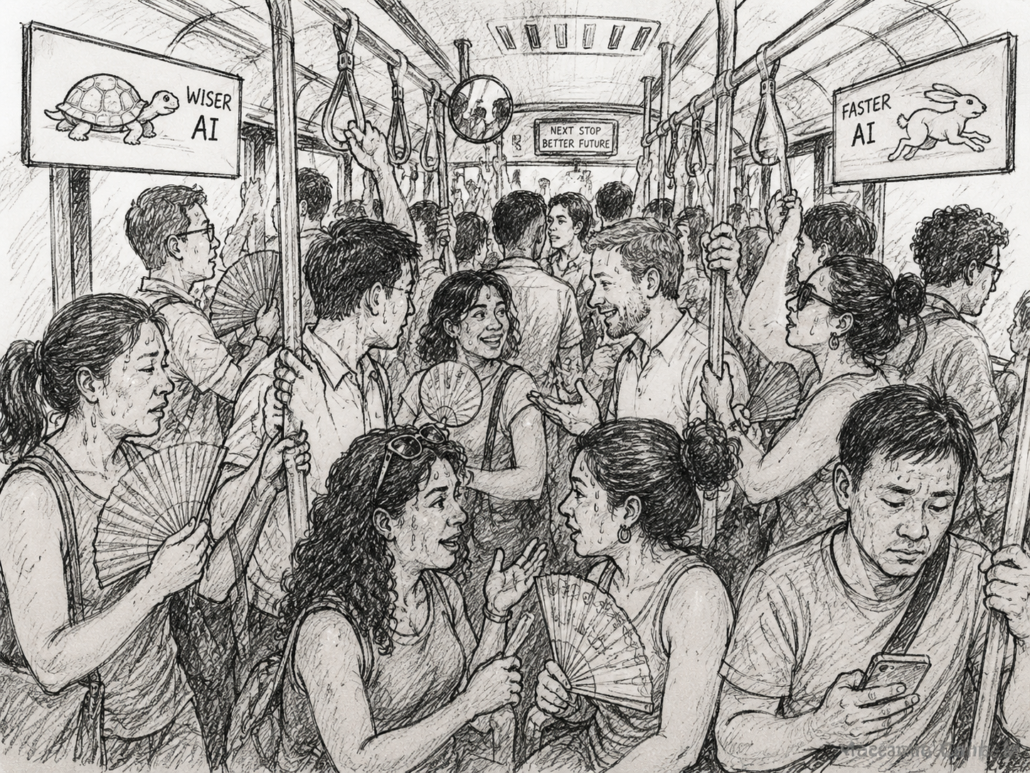
Every international conference leaves me with two notebooks. The first is the familiar one. It quickly fills with keynote speeches, policy announcements, negotiated language, institutional initiatives, statistics, and carefully crafted declarations. It records what happened inside conference rooms and eventually becomes articles, reports, and policy briefs. The second notebook is less orderly. It captures conversations on buses and in cafeterias, unexpected encounters, and questions that linger long after the conference has ended. It rarely contains definitive answers. Instead, it preserves impressions, curiosities, and stories, triggering new questions and explorations. Geneva AI Week (6–10 July) filled both notebooks. The official notebook tells the story of three major gatherings: the inaugural Global AI Dialogue on AI Governance, the AI for Good Global Summit, and the WSIS Forum. Together, they brought thousands of diplomats, engineers, entrepreneurs, academics, civil society representatives, and students to Geneva to discuss one of the defining technologies of our time. The second notebook tells a different story. It begins on Bus No. 5 after a long conference day. It wanders through Geneva’s streets, searching for the city’s intellectual heritage. It records conversations with students, colleagues, and complete strangers. It ends with questions about storytelling, curiosity, and the remarkable people one often meets just outside the conference halls. Neither notebook tells the whole story. Together, they offer a fuller picture of Geneva AI Week and, perhaps, of international conferences themselves. If future historians look back at Geneva AI Week, they may remember it as the moment when the UN made its strongest bid yet to become a central actor in global AI governance. The launch of the Global AI Dialogue and the presentation of the AI Scientific Panel’s report represented much more than another conference. They signalled an institutional ambition to place the UN at the centre of one of the most consequential policy debates of our time. In many conversations throughout the week, another thought surfaced repeatedly. Success in AI governance could become one of Secretary-General António Guterres’ lasting legacies. His tenure has unfolded during an exceptionally turbulent geopolitical period, marked by wars and deep divisions that have often constrained the UN’s ability to act decisively. AI offers a different kind of challenge—one where multilateralism may still have an opportunity to demonstrate its relevance. Many people wonder if the UN can keep up with the fast changes in technology. However, the slow and careful way that international organisations work, which is often criticised, might actually be a helpful strength. More than 2,500 years ago, Aesop told the story of the tortoise and the hare. In AI governance, the UN may well turn out to be the tortoise. While technology companies race to develop powerful systems, international institutions move more cautiously, building consensus, incorporating diverse perspectives, and thinking in longer time horizons. The atmosphere of Geneva AI Week reflected this broader shift. Familiar AI celebrities attracted less attention than in previous years. Instead, conversations included philosophers, educators, social scientists, development practitioners, and even religious leaders. Catholic bishops discussed ethics alongside engineers. Development experts debated capacity-building with AI researchers. The conversation became noticeably broader and richer than one dominated solely by technology. My contribution to the week was both analytical and practical. I had the privilege of co-chairing one of the Global AI Dialogue tracks devoted to AI divides and capacity building. Moderating UN discussions follows well-established diplomatic conventions. Speakers are introduced with a carefully observed protocol before delivering prepared national or institutional statements. The process is orderly and respectful, yet it often resembles a sequence of parallel monologues more than a genuine dialogue. Since the meeting itself carried the word ‘dialogue’ in its title, I wondered whether there might be room for a small experiment. Rather than moving mechanically from one intervention to the next, I briefly reflected on a central idea from each speaker before introducing the following participant. I intended not to interpret or judge their remarks, but to build small bridges between interventions so that participants could hear the discussion evolving rather than simply unfolding. It was a delicate exercise. Summarising senior officials always carries the risk of highlighting one aspect while unintentionally overlooking another. Fortunately, most participants appreciated the additional dynamism. Some even remarked afterwards that the discussion felt more connected than similar sessions they had attended. The experience reinforced a belief I have developed over many years of moderating diplomatic meetings: even highly formal settings can benefit from a carefully measured degree of informality. Structure and spontaneity need not be opponents; together they often produce better conversations. Alongside formal participation, the week was filled with Diplo activities: meetings with alumni, conversations with partners, encounters with long-standing colleagues, and discussions with participants in the UN Graduate Programme and other young professionals. These talks quickly turned into some of the best parts of the week. The young people showed something you don’t often see these days: they were curious but also realistically hopeful. They understood the dangers of AI but didn’t let that stop them. They asked questions about all kinds of things—like how AI is managed, philosophy, religion, education, diplomacy, and what work will look like in the future. Although I was nominally the teacher in many of those conversations, I was often left feeling that I had learned more than I had contributed. Between ease and excellence: The real challenge of AI transformation Following a decade-long tradition, we reported this year from many sessions of Geneva AI Week. One interesting insight illuminated current AI discussions. A few colleagues asked why we still report when so many transcribing and reporting apps and tools are available. It’s true that AI tools, like reporting apps, are now common. But using these tools isn’t the same as producing accurate and well-grounded reports. To close that gap, we need expert human checks, well-trained AI models, and smooth steps from recording voice to finishing the report. The main challenge in using AI for any purpose, including diplomacy, is the big gap between two options. On one side, there are easy-to-use apps that anyone can start with right away. On the other side, there is the harder task of creating a system that closely connects human knowledge with AI. The key strategy is to move from just using simple apps to building this deeper connection, which is important for all activities, like conference reporting. Consult the reports from the Global Dialogue on AI Governance and the WSIS Forum. Those conversations also reinforced another conviction. AI ultimately depends on knowledge. Yet discussions about AI governance frequently overlook one important question: where does that knowledge come from? Much of it is profoundly local. In the days leading up to Geneva AI Week, we explored this idea through a series of walks we called terroir savoir – the knowledge of a place. Rather than beginning with algorithms or regulations, we began with Geneva itself. One walk visited the Alabama Room, where important chapters of the International Committee of the Red Cross and modern international arbitration originated.
Another explored the Botanical Garden, reflecting on the relationships between nature, scientific discovery, and AI.
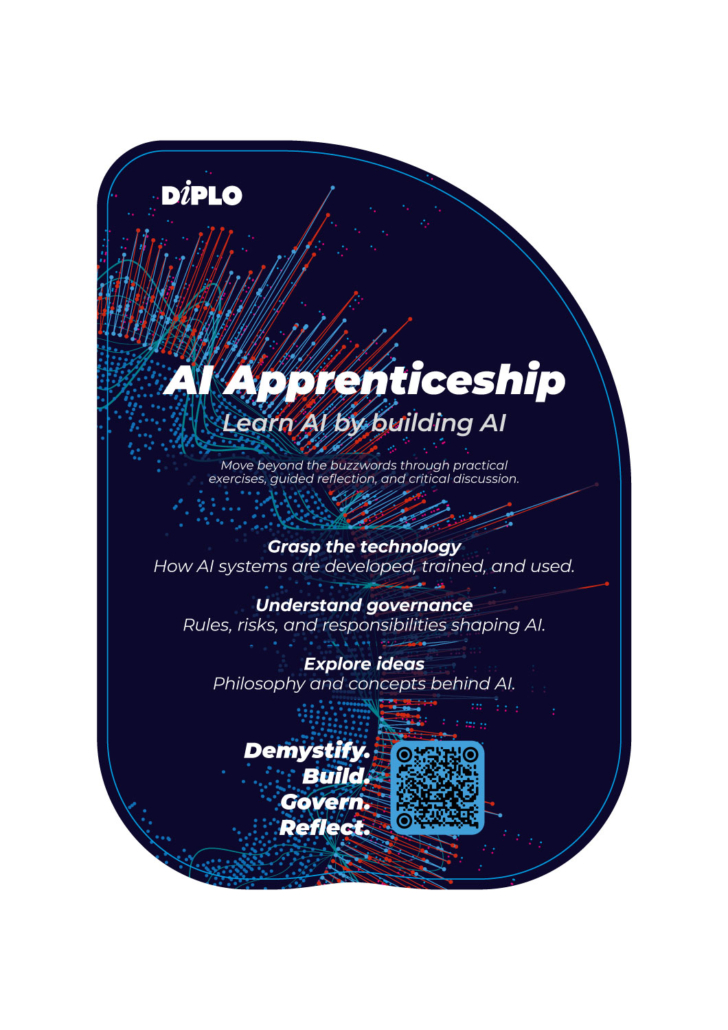
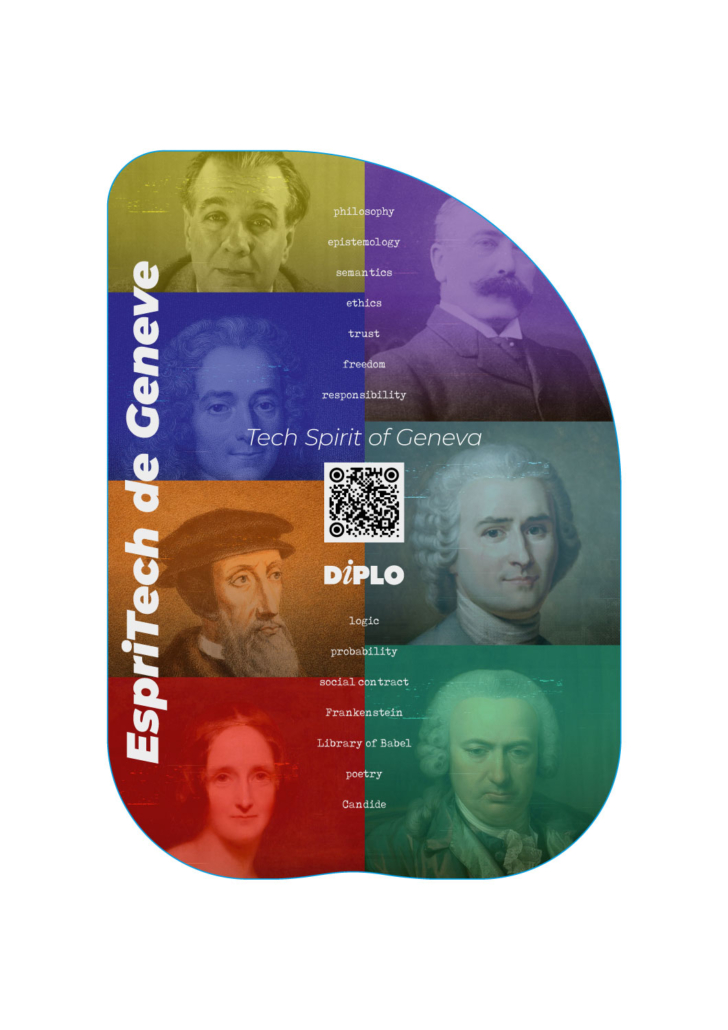
Future walks will lead us to places associated with Voltaire, Rousseau, Borges, and many others whose ideas continue to illuminate contemporary questions surrounding AI. Technology never develops in isolation. It grows within thinking landscapes shaped over centuries. Understanding those landscapes may ultimately prove just as important as understanding the technology itself. The same philosophy inspired several small Diplo experiments during Geneva AI Week. As more of our conversations migrate online, physical objects become surprisingly valuable anchors for discussion. We began referring to these artefacts as AI ‘totems.’ Three attracted particular attention: Geneva AI/Digital Passport, hand-fans on EspriTech de Geneve and AI Apprenticeships, and AI Canvas.
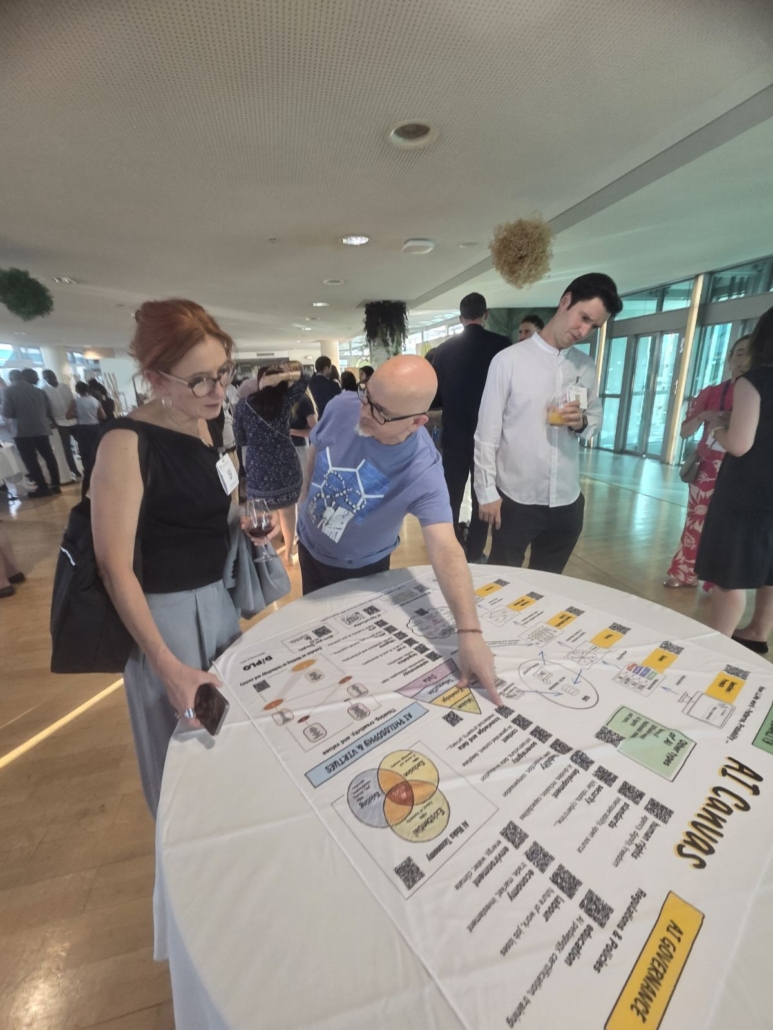
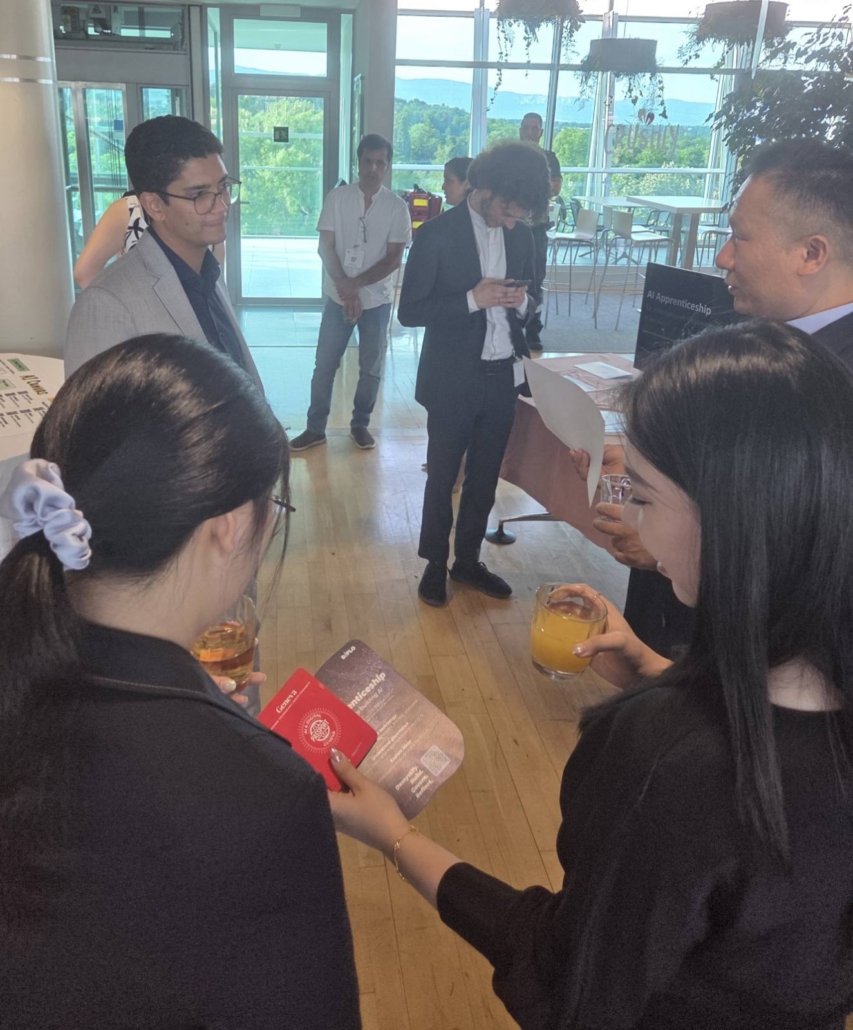
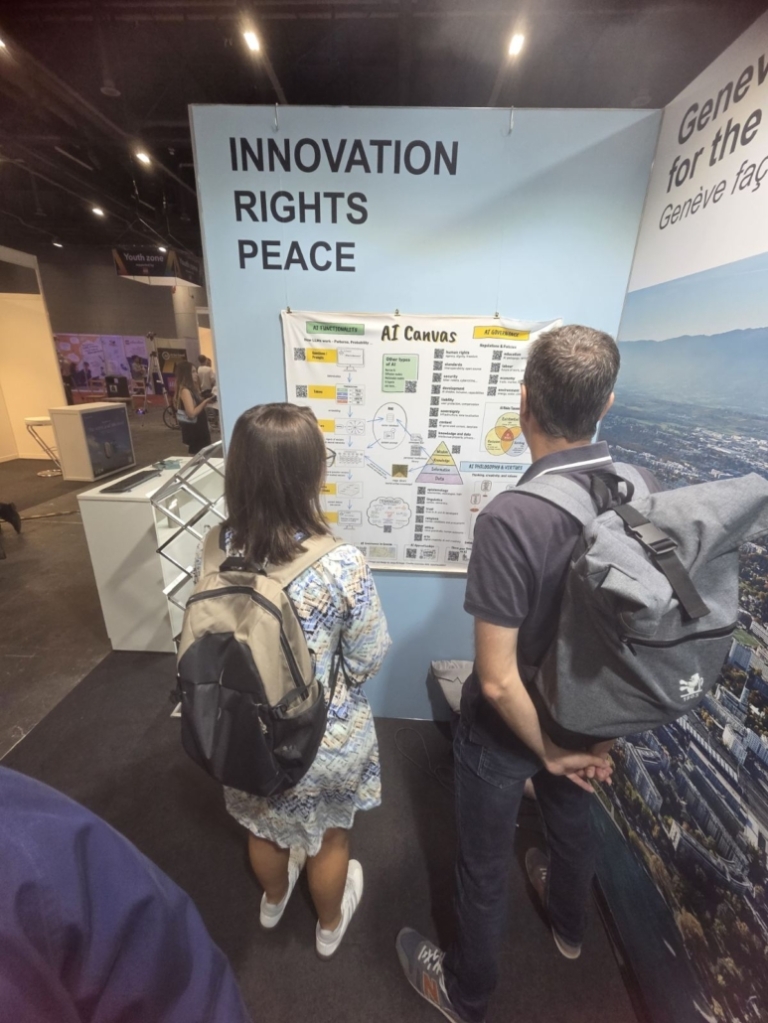
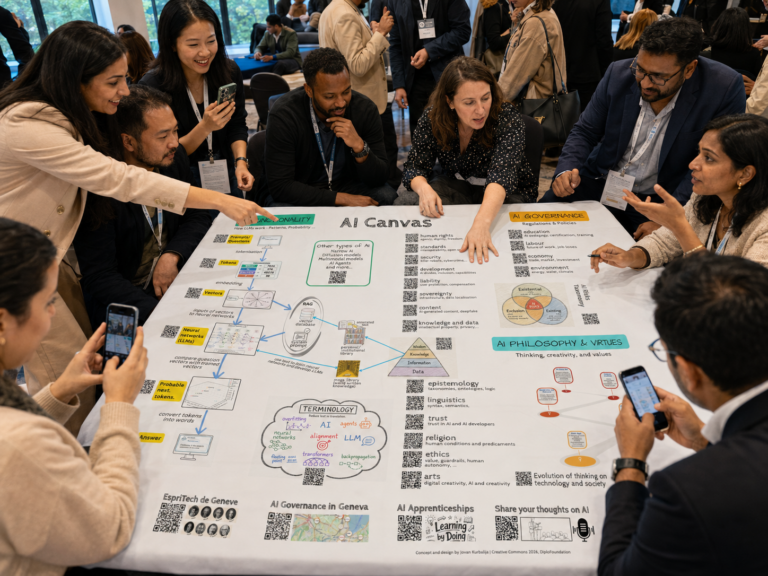
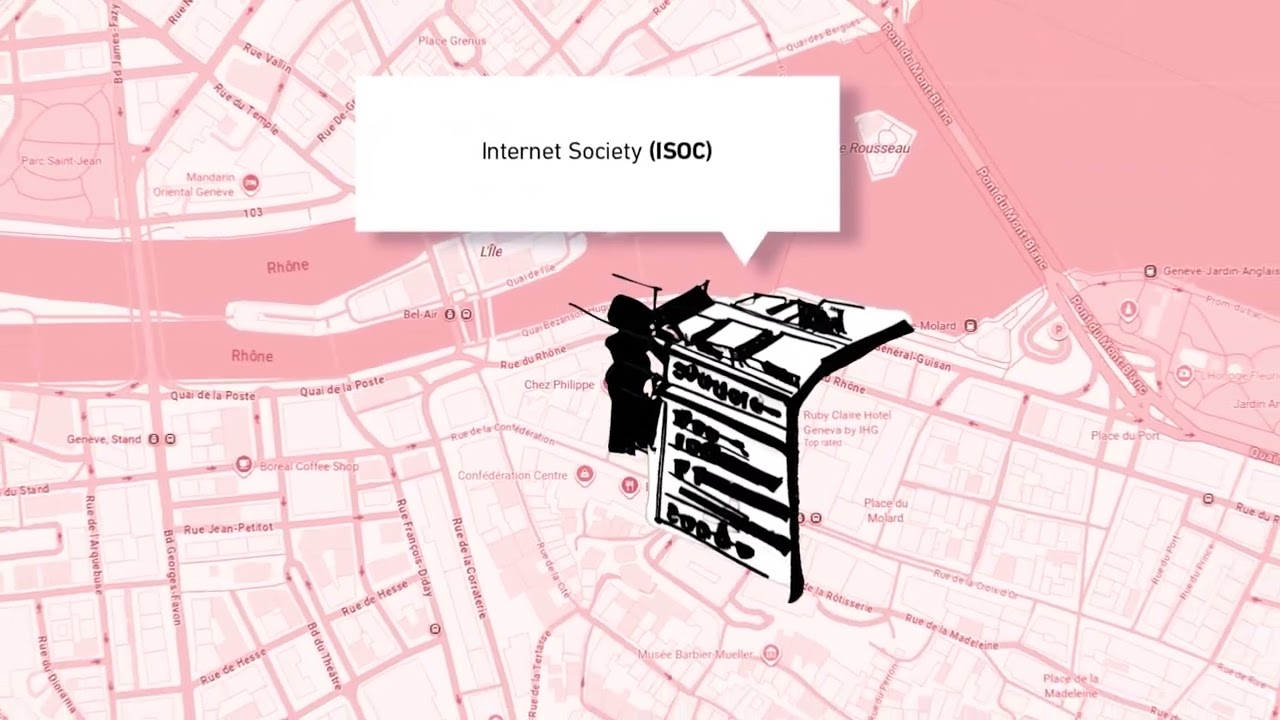
Geneva AI/Digital Passport At Geneva AI Week, thousands of participants got an AI/Digital Passport. This passport is a simple guide to the expanding AI community in International Geneva. Through QR codes, readers could seamlessly move from concise explanations to deeper online resources. The second totem required far less explanation. Geneva happened to experience an intense summer heatwave, making our hand-fans unexpectedly popular. Sometimes, usefulness is the best form of communication. The most impactful ‘totem’ was the AI Canvas. At Diplo’s booth, many visitors were attracted by the AI Canvas as a simple and visual explanation of AI technologies, governance, and philosophy. The AI Canvas found a new and creative use when laid on a table as a tablecloth. Instead of presenting information passively on a wall, the Canvas transforms the table itself into a shared space for thinking and conversation. It invites people to sit around it and discuss AI technology, governance, philosophy, and society together. Since time immemorial, people have gathered around tables to exchange ideas, tell stories, debate, negotiate, and make decisions together. Millions of conversations take place around tables every day in boardrooms, classrooms, community centres, cafés, and restaurants. As AI increasingly shapes the daily lives of citizens, businesses, and communities worldwide, the table can once again become a space for meaningful dialogue. The AI Canvas transforms the tablecloth into a shared map for discussion, helping participants explore questions, connect ideas, and express their hopes and concerns. AI tables can gather concerned parents discussing the future of their children’s education in the AI era, entrepreneurs reshaping their businesses, and policymakers developing AI regulations, to name a few contexts. By pointing to different parts of the Canvas, scanning QR codes, and debating with one another, participants turn an ordinary table into a lively space for reflections on AI and our shared future. Several organisers of future AI events have already expressed interest in using hundreds, or even thousands, of AI Canvases in conference build-ups, allowing local table discussions to contribute directly to broader policy conversations. AI Week is only one visible moment in Geneva’s digital governance ecosystem. Beyond the conference halls, a wider network of institutions across International Geneva continues its work on digital policy, AI, and internet governance. The video below, shown at Diplo’s booth during the summit, offered a glimpse into the many actors and connections that sustain this work throughout the year.
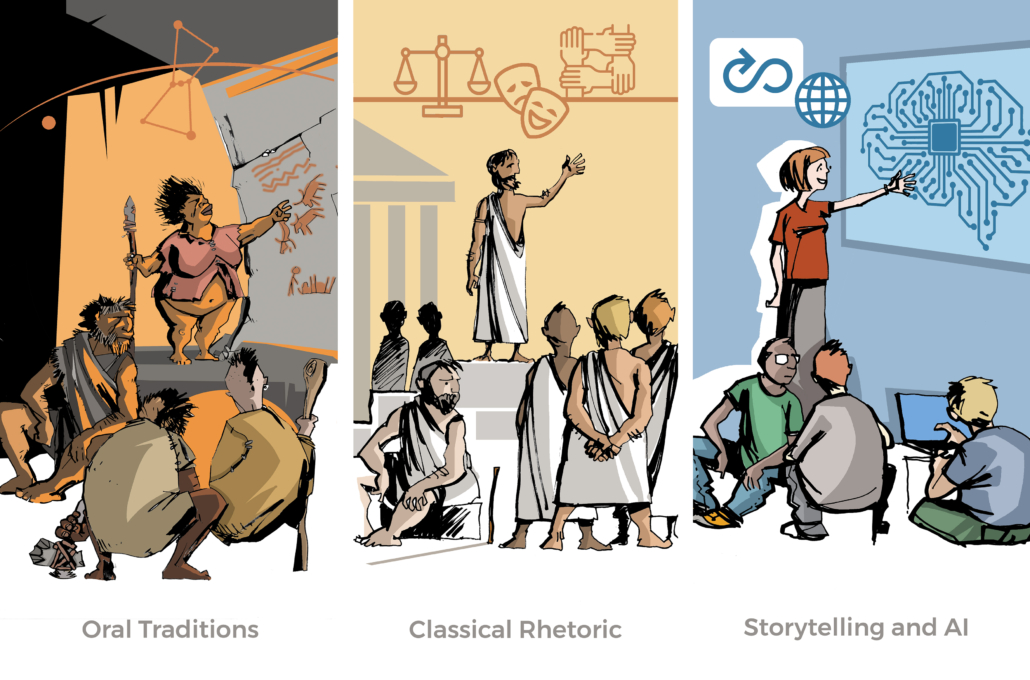
As I closed my first notebook at the end of the week, I realised it contained a satisfying account of what had happened. It documented institutional milestones, policy innovations, experiments in diplomacy, and Diplo’s own contribution to Geneva AI Week. Yet it did not fully explain why the week stayed with me. For that, I had to open the second notebook. The first notebook explains what happened during Geneva AI Week. The second tries to explain what cannot be seen through official lenses. It contains no declarations or negotiated texts. There are no action points or policy recommendations. Instead, it records moments that reveal something about diplomacy, technology, and human nature that no official report could fully capture. Every conference has its unofficial meeting rooms. One of mine this year turned out to be Bus No. 5. After another long day at Palexpo, the bus towards the city centre was already overflowing with participants. Managing to secure a seat felt like a small victory. Perhaps my grey beard persuaded someone younger not to compete too enthusiastically for it. As I settled down, I noticed an old friend, Khaled Fattal, sitting near the back. I immediately abandoned my hard won seat and walked towards him. We greeted each other warmly. Then something unexpected happened. Without saying a word, Khaled reached for the door-opening button as the bus was still at the Palexpo bus-stop. He gently brushed my shoulder and nodded towards my sleeves. Only then did I notice an insect, remarkably large by Geneva bio-standards, clinging quietly to the sleeve of my jacket. As the doors opened, it flew harmlessly outside before anyone else became aware of its presence. Only afterwards did I understand what Khaled had done. Had he tried to brush the insect away inside the crowded bus, someone would almost certainly have panicked. Instead, he solved the problem so discreetly and smoothly that no problem ever emerged. It was a lesson in emotional intelligence delivered entirely without words. Three young women sitting across the aisle had watched the episode unfold like a short theatre performance. Within minutes, we were all chatting and laughing together. What began as an ordinary bus ride became the most engaging panel discussion of the day. We spoke about crisis management, emotional intelligence, diplomacy, insects, and artificial intelligence with remarkable ease. One young lady worked for GIZ and already knew Diplo. Two others worked for ITU. A software developer joined our spontaneous discussion. A former student from the College of Europe recognised me and told me how useful our diplomatic simulations had been in preparing her for the week’s negotiations. None of this had been planned. Yet that unplanned conversation remains among my strongest memories of Geneva AI Week. International conferences often promise networking. What they occasionally deliver is something much richer: a genuine human connection born entirely by chance. One question followed me throughout the week. It appeared during formal sessions, resurfaced over coffee, and returned during conversations with colleagues from other continents and cultures. What happens to storytelling in the age of artificial intelligence? Storytelling is perhaps humanity’s oldest technology for making sense of the world. Long before writing, laws, or universities, people understood themselves through stories. Today, AI can generate convincing stories within seconds. Does that make storytelling less valuable or more important than ever? Conversations with teachers from China reminded me how differently civilisations preserve memory while relying on remarkably similar narrative traditions. Discussions about Africa highlighted the enduring role of oral storytelling as a living archive of wisdom rather than simply a form of entertainment. Those conversations gradually shifted my attention back to education. For many years, storytelling has been central to Diplo’s teaching philosophy. Facts become meaningful only when woven into narratives. Knowledge becomes memorable when connected to human experience. Perhaps the challenge is not whether AI can tell stories. It clearly can. The more important question is whether AI can help people become better storytellers – more attentive listeners, more thoughtful interpreters, and more imaginative communicators – instead of replacing those deeply human capacities. I returned home without definitive answers. Instead, I returned with pages of notes and even more questions. Increasingly, I have come to believe that conferences are valuable not because they provide answers but because they improve the questions we ask. Every conference develops its own unofficial ‘anthropology’. In this vignette, the two main protagonists are young Latin American women in their early 20s. The first one is an event influencer or ‘visibility amplifier‘ who goes from session to session, raises her hand to have first interventions in which she speaks more about herself than asks the question. Typically, such individuals focus on fashionable causes or trendy issues. Very often, they focus on youth inclusion, which is a critical topic. The second one is a part-time waitress and an engineering student, which was a surprising discovery. Coincidentally, both are of similar age and from the same country. On the first day, I met the ‘visibility amplifier’, who introduced herself as a ‘youth envoy‘ keen to excel in AI diplomacy through cooperation with Diplo. Curious rather than sceptical, I asked her about storytelling traditions in her home country in Latin America. The question seemed to surprise her. She was fine-tuned for PR and promotional exchanges. Our conversation ended here, and I kept hearing her voice in session after session. Her interventions were more about herself than about the ‘youth’ cause. Sometimes, you have activists who use a speech ‘avalanche’ approach to raise awareness. In this example, it was more personal PR exercise. Later that afternoon, while having lunch, I met the waitress, the second protagonist of this vignette. As she was taking the order, I asked her the identical question about storytelling. Her face immediately lit up. Because she had to continue serving other tables, our conversation unfolded in brief instalments. She would disappear carrying a tray. A few minutes later, she would return with another thoughtful answer before rushing away again. Every exchange revealed extraordinary curiosity, humour, historical awareness, and intellectual generosity. As lunch unfolded, we dove deeper into storytelling, magical realism, Gabriel García Márquez, Macondo, Latin American history, and the role of stories in shaping national identity. Eventually, I got more curious about the storyteller than the stories. She explained that she was studying engineering in Geneva while working in the restaurant to support both herself and her brother. Those two encounters became, for me, a quiet metaphor for international conferences. One reflected their familiar choreography: visibility, networking, carefully prepared interventions, and recognised titles. The other revealed something far less visible but perhaps far more important: genuine curiosity. For a brief moment, I wondered how conferences could better include genuinely marginalised voices. Yet, one question has remained with me ever since. How many remarkable people never reach the microphone, not because they have nothing to contribute, but because they simply do not play the conference game? As I prepared to leave, I remarked that perhaps she should have been speaking at the summit rather than serving lunch. She smiled kindly with a touch of irony. That smile has stayed with me longer than many of the speeches I heard throughout the week. As I look back on Geneva AI Week, both notebooks remain open on my desk. The first records official dynamics: the United Nations’ growing role in AI governance, new policy initiatives, diplomatic experiments, and Diplo’s contribution to the week’s discussions. Those pages will eventually become articles, reports, and policy recommendations. The second notebook contains tacit glimpses from a crowded bus that became a seminar on emotional intelligence, cross-cultural conversations about storytelling, walks through Geneva’s intellectual history, and an encounter with a young student whose curiosity reminded me that wisdom more often comes from ‘guides on the side’ than ‘sages on the stage.’ International conferences need both notebooks. Without the first, they would produce little more than pleasant conversations. Without the second, they would become efficient but forgettable exercises in diplomacy. AI will undoubtedly be shaped by regulations, standards, institutions, and technological innovation. Yet, its future will also depend on something much harder to measure: our capacity for curiosity, empathy, imagination, and meaningful conversation. Perhaps that is why, after so many years of attending conferences, I still enjoy them. I return home carrying two notebooks. One explains what happened. The other reminds me why it mattered.NOTEBOOK ONE: What happened
The United Nations enters the AI governance race
Inside the Global AI Dialogue
Diplo around Geneva AI Week
Beyond Palexpo: Geneva’s terroir savoir


Making AI tangible: Power of totems
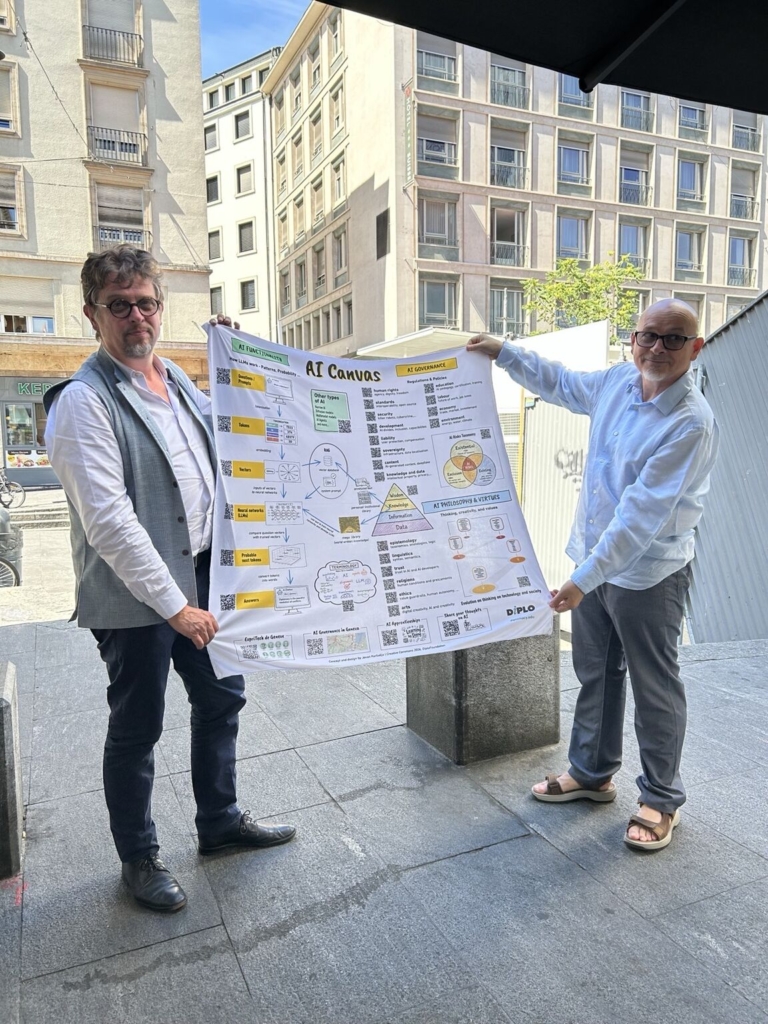
The AI Canvas as a tablecloth
NOTEBOOK TWO: What stayed with me
Bus No. 5: The wisdom of quiet gestures
Storytelling in the age of artificial intelligence
Beyond the microphone: The voices we rarely hear
Closing the two notebooks