As artificial intelligence slowly penetrates various areas of human work and everyday life, researchers and scientists have begun using it to help conserve the environment and care for endangered species. Hardware such as high-resolution vision cameras, diverse environmental sensors, satellite imagery, and drones is becoming more powerful and affordable, allowing vast amounts of data to be collected from remote and fragile ecosystems. AI makes it possible to process this plentiful information quickly and turn it into insights that help researchers and rangers make better decisions and act faster, with less intrusion into the habitats they aim to protect.
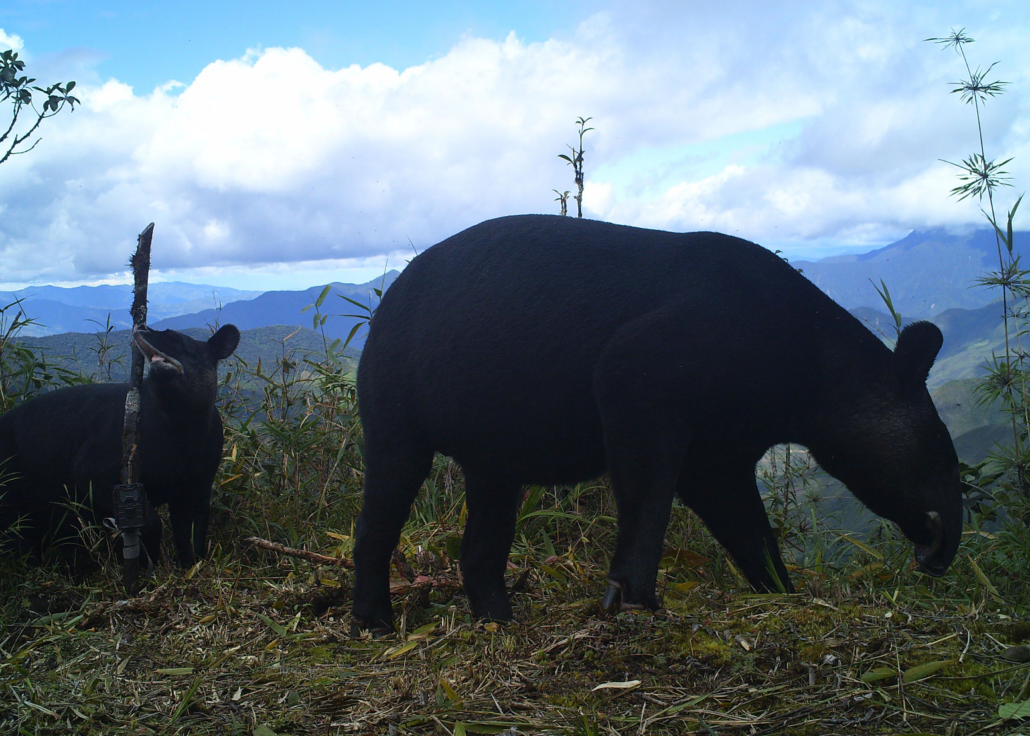
Large conservation organisations are already using these tools. The World Wide Fund for Nature (WWF) and The Nature Conservancy (TNC), among others, use AI to track endangered animals, monitor illegal activities, and assess ecosystem health in ways that would be impossible with manual methods alone. In this sense, AI is becoming a kind of ‘silent park ranger ‘: an invisible, always-on presence that watches, listens, and predicts, so that human rangers and scientists can act more effectively and with greater care. The ‘silent ranger’ combines sensors, machine learning models, and the algorithms that run them. Camera traps, acoustic recorders, drones, and satellites continuously collect images, sounds, and other environmental data. Machine learning models then analyse this data to identify species, detect unusual activity, and flag potential threats. For example, trail cameras equipped with computer vision can automatically recognise individual animals, count populations, and even detect human intruders in protected areas. Acoustic monitoring systems listen for gunshots, vehicle engines, or chainsaws, turning soundscapes into early-warning systems for rangers. Instead of relying solely on periodic patrols or manual footage review, conservation teams receive near–real–time alerts about what is happening on the ground. Collecting data is only the first step; AI makes it useful. Integrated platforms aggregate inputs from multiple sources (camera traps, GPS collars, patrol logs, satellite images) and use AI to highlight what is important. WWF’s involvement in Wildlife Insights, a collaboration with Google and other partners, illustrates this approach. The platform uses AI to automatically process millions of camera-trap photos, filter out empty frames, and identify more than 1,300 species, drastically reducing the time scientists spend sorting manually. This allows researchers to focus on interpreting trends and planning interventions rather than sifting through raw data.
Similarly, TNC’s Animl platform connects solar-powered wireless mesh networks in remote locations to a cloud-based machine learning system that processes camera-trap images almost instantly. On California’s Santa Cruz Island, for instance, Animl can flag invasive species or target wildlife within minutes, instead of requiring weeks or months of manual SD card collection and review. These tools effectively extend the reach of small field teams, giving them ‘extra eyes’ that never sleep. One of AI’s most powerful roles is shifting conservation from reactive crisis management to proactive risk reduction. Predictive models analyse historical poaching data, animal movement patterns, terrain, and even weather forecasts to estimate where illegal activity is most likely. WWF’s Forest Foresight initiative uses predictive AI models combined with satellite data to anticipate illegal deforestation and poaching risks up to six months in advance. This allows authorities and local communities to pre-position patrols, engage with at-risk areas, and potentially prevent harm before it happens. The Nature Conservancy applies similar logic at sea. Its Edge AI for Fisheries Monitoring system runs computer vision models directly on longline fishing vessels, using onboard edge computing and satellite connectivity to analyse video in minutes rather than months. The system automatically detects, tracks, and classifies catches, flagging illegal or unregulated fishing risks before ships return to port. In both cases, AI helps move from chasing crises to preventing them, preserving both wildlife and the livelihoods that depend on healthy ecosystems. Modern conservation generates far more data than humans can manually process. Sensors, satellites, and audio recorders produce terabytes of images, sounds, and measurements that would overwhelm traditional analysis methods. AI distils this deluge into usable ecological insights. AI tools help assess biodiversity by identifying species from photos (similar to iNaturalist-style applications), analysing environmental DNA from water or soil samples, and mapping habitat changes from satellite imagery. Researchers argue that without AI, meeting global targets for protecting endangered species will be impossible, simply because the volume and complexity of data exceed human capacity. In this sense, AI acts as a force multiplier for conservation science, enabling monitoring and decision-making at the planetary scale that the current biodiversity crisis demands.
WWF and The Nature Conservancy are among the most visible pioneers of AI in conservation, but they are far from alone. A growing number of international organisations, research networks, and NGOs are deploying similar tools to monitor biodiversity, prevent illegal activities, and guide restoration. Some of WWF’s and TNC’s initiatives complement the examples already discussed: Beyond these two organisations, several other actors are building their own ‘silent ranger’ capabilities. The UN Environment Programme World Conservation Monitoring Centre (UNEP-WCMC) and Google are collaborating to use AI to tackle unsustainable wildlife trade. Funded by Google’s AI for Science Fund, the project uses large language models and related AI approaches to gather and organise hard-to-find data on tens of thousands of plant and animal species traded globally. By structuring this information, the initiative aims to better support governments and regulators in identifying vulnerable species that may need stronger safeguards under agreements like CITES. Here, AI acts less as a field ranger and more as a global data curator, helping humans make more informed policy and enforcement decisions. The International Union for Conservation of Nature (IUCN), together with Huawei and local partners, runs the Tech4Nature initiative, which applies monitoring technologies and AI analytics to protect specific species and ecosystems. Their projects include: These projects illustrate how AI can be tailored to very different contexts (tropical forests, small island populations, and peri-urban natural parks) while serving the same underlying goal: giving conservationists finer-grained, timely information about the species they aim to protect. Conservation International has developed an AI-powered tool called CIERA (Conservation International Ecosystem Restoration Assistant) to identify where forest restoration will have the greatest impact for people, nature, and climate. CIERA combines geospatial data with information from public policies, government guidelines, and scientific articles to prioritise restoration areas. Tasks that once took months of manual analysis can now be done in minutes, making restoration planning smarter, faster, and more scalable. In this case, the ‘silent ranger’ works less in the forest and more in the planning office, helping humans decide where to act first. Beyond individual organisations, shared AI-enabled platforms are becoming part of the conservation infrastructure. The Seattle-based nonprofit Ai2 offers EarthRanger, a software platform that helps protected-area managers, ecologists, and wildlife biologists make more informed operational decisions in real time, whether preventing poaching, spotting ill or injured animals, or studying behaviour. Similarly, Wildlife Protection Solutions supports more than 250 conservation projects in over 50 countries, using AI-powered remote cameras to provide real-time monitoring of animals and poachers and alert rangers before harm occurs. These tools show how AI is becoming a common layer across many protected areas, regardless of which organisation manages them. Together, these examples demonstrate that AI in conservation is not a niche experiment but an emerging global practice. From UN agencies to international NGOs and local field projects, the ‘silent ranger’ is taking many forms (camera traps, acoustic monitors, predictive models, restoration planners, and data curators), all aimed at the same end: helping humans care for nature more effectively and at the scale the current biodiversity crisis demands. Despite its promise, AI in conservation has limitations. Some biologists worry that over-reliance on remote AI tools could distance researchers from direct field experience with animals and ecosystems. AI systems can misidentify species, generate false alarms, or reflect biases in the data they were trained on. The Nature Conservancy explicitly frames its approach around responsible AI use: AI should augment human expertise, not replace it, and every application should be guided by human oversight, scientific judgement, and clear governance. Acknowledging these limits reinforces that AI is best understood as a powerful tool in human hands, not an autonomous saviour. AI as a ‘silent park ranger’ does not seek to replace human rangers, scientists, or local communities. Instead, it extends their reach, giving them more time, better information, and earlier warnings so they can act with greater precision and less disruption to fragile ecosystems. In an era of accelerating biodiversity loss and climate change, such tools are indispensable. Still, they remain most effective when guided by human judgement, local knowledge, and a clear commitment to protecting nature for its own sake. Author: Slobodan Kovrlija
What the ‘silent ranger’ actually is
Turning information into action
Predictive conservation
Scaling biodiversity science

Concrete stories: from WWF and TNC to a global conservation toolkit
UNEP-WCMC and Google: mapping the risks of wildlife trade
IUCN and Huawei’s Tech4Nature: AI for jaguars, gibbons, and eagles
Conservation International: AI for smarter restoration
Shared platforms: EarthRanger and Wildlife Protection Solutions
AI as a tool, not a saviour