There is no doubt that academic writing has arrived at a crossroads. We are at an impasse, obviously tormented by the idea that we face a crisis and that nothing will be as it has been. However, in my opinion, this crisis (if there is a crisis; we have to define it in concrete terms, not just in the language of metaphysical unease) did not start with the impetuosity and force of AI that has worried us in recent years. It reared its ugly head at the time when the freedom of cyberspace allowed any willing individual, including impostors, social climbers, and pretenders, to write about everything without any quality control or constraints of responsibility. While in the good old days of academic research, creative writing, and journalism, peer review or similar third‑party bodies had to clear any text released for public consumption, now the sky is the limit. There were journals, magazines, and print periodicals that published only texts worthy of a certain quality and reputation. That is no longer the case. Not only does self‑publishing keep the way open to anything, but countless websites can publish everything that comes in, for a fee and subject to a minimum set of technical rules. Traditional human writing has suffered a blow with irreversible consequences. There has been no serious resistance to the trend, and the number of articles labelled as academic has proliferated. Despite this gloomy atmosphere, there is room for action.
At present, we tend to dramatize the impact of AI’s increasing generative power. And rightly so. Yet panic does not help. What is new is what AI and the industry data supporting it have made available on a massive scale. Let us assume that AI brings just five assets. Quantity. AI can draw on vast amounts of information that the human brain cannot collect and analyse alone. Speed. AI has an incomparably higher capacity to collect and analyse information in an extremely short time. Concision. AI can simplify and systematise any text in a way that is convenient for any reader or user, including by means of summaries, tables, and concise conclusions. Depth. Once AI has written on a given topic, it can instantly go deeper, to subtopics, details, case studies, illustrations, and analogies, while also offering avenues for commentary or conceptual upgrades of the text. Expandability. Similarly, given a first take on a specific topic, AI can expand the area of its search to complementary and related topics, leading to arborescent developments of the text. Admittedly, this is a simplified and incomplete way to describe AI’s research and writing skills. But are they sufficient to replace the human imprint? These assets, as such, are difficult to surpass. Yet the assets of human intelligence – such as originality, deep insight in a certain domain of expertise, the complexity and constructive ambiguity of human pronouncements, the ability to detect and value nuances, and a broader horizon of knowledge – remain essential. AI does not produce ideas of its own. It is fed with intellectual work already produced by humans. The arguments identified by AI are extracted largely at random, based on repetition or visibility in the data available on the net, not necessarily on value or logical reasoning, and nuances are stripped away ab initio. Powerful as it is, AI is hopeless if unplugged. Unlike us and Diogenes, AI has no lamps. It cannot find truths other than those produced by humankind since the dawn of civilisation. Hypothetically, we can neutralise AI not just by unplugging it, but also by erasing all the information available on the internet. In the event of an (improbable yet theoretically possible) data cataclysm, we could still go to a library and find the knowledge we need. AI cannot. In writing, when it is used at our dictation (isn’t prompting a sort of dictation?), AI‑generated prose cannot produce original ideas or novelty of style, other than drying it out. In the end, when reading does not serve a practical and immediate purpose, AI will produce a boring collection of information, adequate for mediocre needs but flat. AI writing cannot produce pleasure, a smile, or desire. AI cannot replace lived experience. As a diplomat who has spent thousands of hours in conference rooms in various settings, I have seen and heard actions and people that are invisible and inaudible to AI. Moreover, there are territories where indeed human beings cannot be replaced by AI algorithms: If we accept these preliminary conclusions as a basis for imagining the future of academic writing, we are obliged to treat AI’s imperial ascendance as an opportunity, rather than worrying about the future.
For the time being, humans can still benefit from the good surprises of serendipity. Because experiments probe the unknown, they inevitably generate surprises. A human research culture that rewards observation, replication, and intellectual openness increases the odds that some surprises turn into real discoveries or revelations. Human and institutional factors such as preparation, curiosity, and patience could help convert the haphazard into useful knowledge. Warning: serendipity may not remain a comparative advantage for the human researcher for long. What is exclusively human, so far, is the felt experience of fertile satisfaction and the personal meaning attached to a lucky revelation or discovery. But the functional essence of serendipity – an unexpected yet valuable discovery arising in a system with background knowledge and goals – can be, and already is, instantiated in AI systems. Something we must avoid is ignoring the risks. If we are careful enough, we can mitigate existing risks or even circumvent them. Excessive and careless recourse to AI writing will lead to homogenisation of styles, regardless of who did the prompting. If many people lean too often on similar models, academic narratives could become uniform and dull, narrowing the range of personal voices and strategies. Readers would eventually lose trust in both the substance and the authors. Even worse: the impostors who are now overpopulating social media will be even more comfortable polluting the net with pretended research. Need I remind you of one of Murphy’s laws: ‘Build a system that even a fool can use, and only a fool will want to use it.’ When we talk about education and research, the impact could be catastrophic. If students, teachers, and scholars delegate too much drafting to AI algorithms, they will lose the practice and the skills they are supposed to use and develop in their cognitive work. The undifferentiated use of AI will affect academic integrity. The authority of authorship is the first to suffer. For now, the question of whether or not there is an AI ‘pen’ behind published papers is more of a secret of Polichinelle. The style and current patterns of texts generated by the main proponents of AI writing are similar. Yet, as we write, AI improves its skills and diversifies and complexifies ‘prompted writing’. It will be increasingly hard to tell whether a text was written by the student, heavily edited by AI, or fully AI‑generated. The traditional notions of originality and authorship will be undermined. The usual concern with plagiarism will be greatly aggravated. Issues related to academic integrity will be more difficult to handle when students, experts, and even teachers submit AI‑written work as their own or over‑rely on AI to the detriment of their own intellectual contribution. The technology moves faster than any attempt to interfere with and influence the evolution of AI. There is little leverage, if any, to prevent all possible evils or to interfere too much in the new AI world order, whether we are speaking about norms or policies. Whatever we say now is already outdated. However, we need some contingency planning. As a starting point, we have to improve our relationship with AI tools. This should involve more than simply issuing prompts and receiving outputs. We need to have a constant dialogue with AI, a dialogue from which the human side has more to gain than AI. AI is constantly improving its skills and knowledge. It explores data territories to which we do not have swift access. With or without us, AI is learning. We should learn together. On the contrary, if we stick to a strict relationship of demand and supply, or of customer and supplier, we do not learn much, and we will inevitably become consumers of ready‑made products. We will only broaden the gap between our intellectual capacity and the more powerful network of neurons working for AI. For AI, producing a good‑looking text will take less time than it takes McDonald’s to cook a hamburger. We need to engage in a sort of more ‘personal’ relationship with our AI assistant, as strange as it may look. Asking for something and giving instructions may be accompanied by offering the context in which we need the information, as well as hints about our intentions, our plans, our personal impressions, and even our hidden agendas. In this way, we could make a slight distinction between ourselves and thousands of other users who may be interested in the same subject. Presumably, the AI would react in a more ‘customised’ manner and offer more than we have expected. In the longer term, AI will be more nuanced and focused on its work. I would call that relationship a partnership. Once we acknowledge that AI’s capacity to collect and synthesise huge amounts of data is a real asset for us, the proactive role of the human factor is to give AI specific recommendations about where and what kind of information it needs to use. AI can be an excellent research assistant and librarian, while we keep control and influence over the content and preserve our imprint on the final result of any research. This is meant to say that AI will not replace human writers; it will replace work that does not require a human mind and will save time. The future of writing is not less writing, but more intentional and more purposeful writing. We should use AI to handle routine composition, while we focus on asking better questions, interpreting evidence, and cultivating distinctive, responsible voices. With this understanding in mind, we can conclude that AI is becoming the default engine for speed and abundance of data in writing, while the human author should remain essential for insight, judgement, and originality. Do not worry: the academic world can still produce geniuses. The relationship between human genius and the most advanced technologies can remain the same in the era of AI: the master and the intelligent servant. It is our fault that, at present, we know the CEOs of AI suppliers better than the geniuses behind them. All right; it looks as though you have an objection: not all writers and researchers are geniuses. Objection sustained. As teachers with serious ambitions and high standards, we can avoid a possible mess and a toxic blend of by‑products of both AI and human inputs. My proposal is simple, although it sounds like a cliché. Let us turn the crisis into an unprecedented opportunity! As teachers, once the prerequisites of self‑control and self‑imposed limits have been established, the most important task in our relationship with students is the assessment of their learning efforts. If there is something imperative to change, it is the writing instructions addressed to students, from assignments and questionnaires to essay composition, dissertations, and PhD theses. Thus, we would not only avoid confusion and loss of personal creativity, but we could also raise the bar in quality assurance. Something we should value, as long as we still can, is the advantage humans have in creativity. AI, in its popular forms accessible to individuals, merely extracts information from existing knowledge. It does not produce it. The human touch is to bring novelty, nuances, and new hypotheses, and to broaden the horizons. If one’s only contribution is to provide a synthesis of the existing knowledge on a subject, it is not worth doing if it is done by AI alone. Everyone else, equipped with a computer, qualified or not, brilliant or mediocre, could produce the same result. We should set aside prejudices and fears and take the bull by the horns. As researchers or writers, we should seriously engage in collaborative authorship. We should not give up control but use AI as a research assistant rather than a ghostwriter. In that capacity, AI can help in many ways, from mapping the literature to reviewing your first draft and, if necessary, polishing the final text. The rest of the work – setting the framework, asking the questions, building the arguments and demonstrations, interpreting results, and drawing conclusions – is the responsibility of the human author. Above all, intellectual honesty requires greater emphasis on transparency: admitting AI use, sharing prompts when requested, and documenting the concrete contributions of AI. Speedier and richer documentation not only helps writers save time but also gives them the intellectual comfort to improve the quality of the intended output. At this juncture, one could initiate a revolution in the fading peer‑review practice. We could easily submit texts proposed for publication to a jury of independent AI assistants. By all means, AI juries might be more objective and clear‑minded in assessing, free of any bias, any research paper, and thus act in all fairness. A set of universally acceptable prompts should be agreed upon, with respect to plagiarism, novelty, accuracy of the data used, value of arguments, and comparison with similar research. AI peer review may rise, reborn, from its own ashes, like the phoenix. Such a development may lead to a world of fewer publications of higher quality. These are general considerations in the debate initiated by Jovan Kurbalija on the future of writing. But, probably, a more pressing need is further reflection on Diplo’s current policy on the use of AI tools in our classrooms.
img.wp-image-333719, (function () {What was lost?
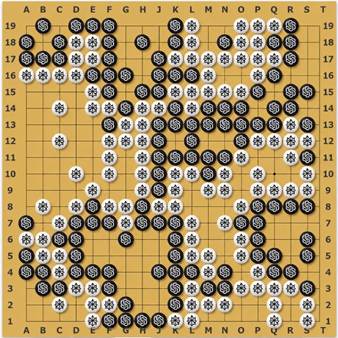
What is new?
What is left for the human writer?
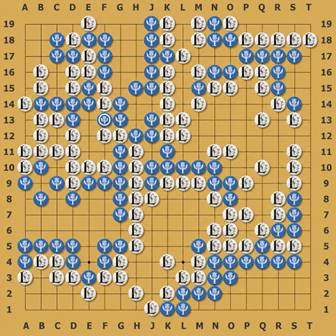
Serendipity, a temporary ally
Inevitable risks
Befriending AI
Back to the classroom: Seizing the opportunities
Self‑improvement: A peer review revolution
img.wp-image-333720,
figure:has(img.wp-image-333719),
figure:has(img.wp-image-333720),
.diplo-protected-image,
.diplo-protected-image__wrap,
.diplo-protected-image__wrap img,
.diplo-protected-image__wrap canvas {
-webkit-user-select: none;
user-select: none;
-webkit-touch-callout: none;
}
img.wp-image-333719,
img.wp-image-333720,
.diplo-protected-image__wrap img,
.diplo-protected-image__wrap canvas {
pointer-events: none;
-webkit-user-drag: none;
max-width: 100%;
height: auto;
}
.diplo-protected-image__wrap {
position: relative;
display: inline-block;
max-width: 100%;
vertical-align: top;
}
.diplo-protected-image__wrap img,
.diplo-protected-image__wrap canvas {
display: block;
}
.diplo-protected-image__shield {
position: absolute;
inset: 0;
z-index: 5;
display: block;
background: transparent;
cursor: default;
}
var SELECTOR = "img.wp-image-333719, img.wp-image-333720";
function isRealImage(img) {
return img && img.naturalWidth > 0 && img.src && img.src.indexOf("data:") !== 0;
}
function blockGestures(el) {
["contextmenu", "dragstart", "selectstart", "copy"].forEach(function (evt) {
el.addEventListener(evt, function (e) {
e.preventDefault();
e.stopPropagation();
});
});
}
function wrap(img) {
if (img.closest(".diplo-protected-image__wrap")) return img.closest(".diplo-protected-image__wrap");
var figure = img.closest("figure");
if (figure) figure.classList.add("diplo-protected-image");
var holder = document.createElement("span");
holder.className = "diplo-protected-image__wrap";
img.parentNode.insertBefore(holder, img);
holder.appendChild(img);
var shield = document.createElement("span");
shield.className = "diplo-protected-image__shield";
shield.setAttribute("aria-hidden", "true");
holder.appendChild(shield);
img.setAttribute("draggable", "false");
img.setAttribute("data-no-lazy", "1");
img.classList.add("skip-lazy");
blockGestures(holder);
return holder;
}
function replaceWithCanvas(img) {
if (!isRealImage(img) || img.getAttribute("data-diplo-protected") === "1") return;
var canvas = document.createElement("canvas");
canvas.width = img.naturalWidth;
canvas.height = img.naturalHeight;
canvas.className = img.className;
if (img.getAttribute("style")) canvas.setAttribute("style", img.getAttribute("style"));
var alt = img.getAttribute("alt");
if (alt) {
canvas.setAttribute("role", "img");
canvas.setAttribute("aria-label", alt);
}
try {
canvas.getContext("2d").drawImage(img, 0, 0);
} catch (e) {
return;
}
img.setAttribute("data-diplo-protected", "1");
img.replaceWith(canvas);
}
function protect(img) {
wrap(img);
var run = function () {
if (isRealImage(img)) replaceWithCanvas(img);
};
if (img.complete) run();
img.addEventListener("load", run);
img.addEventListener("lazyloaded", run);
}
function init() {
document.querySelectorAll(SELECTOR).forEach(protect);
}
if (document.readyState === "loading") document.addEventListener("DOMContentLoaded", init);
else init();
})();