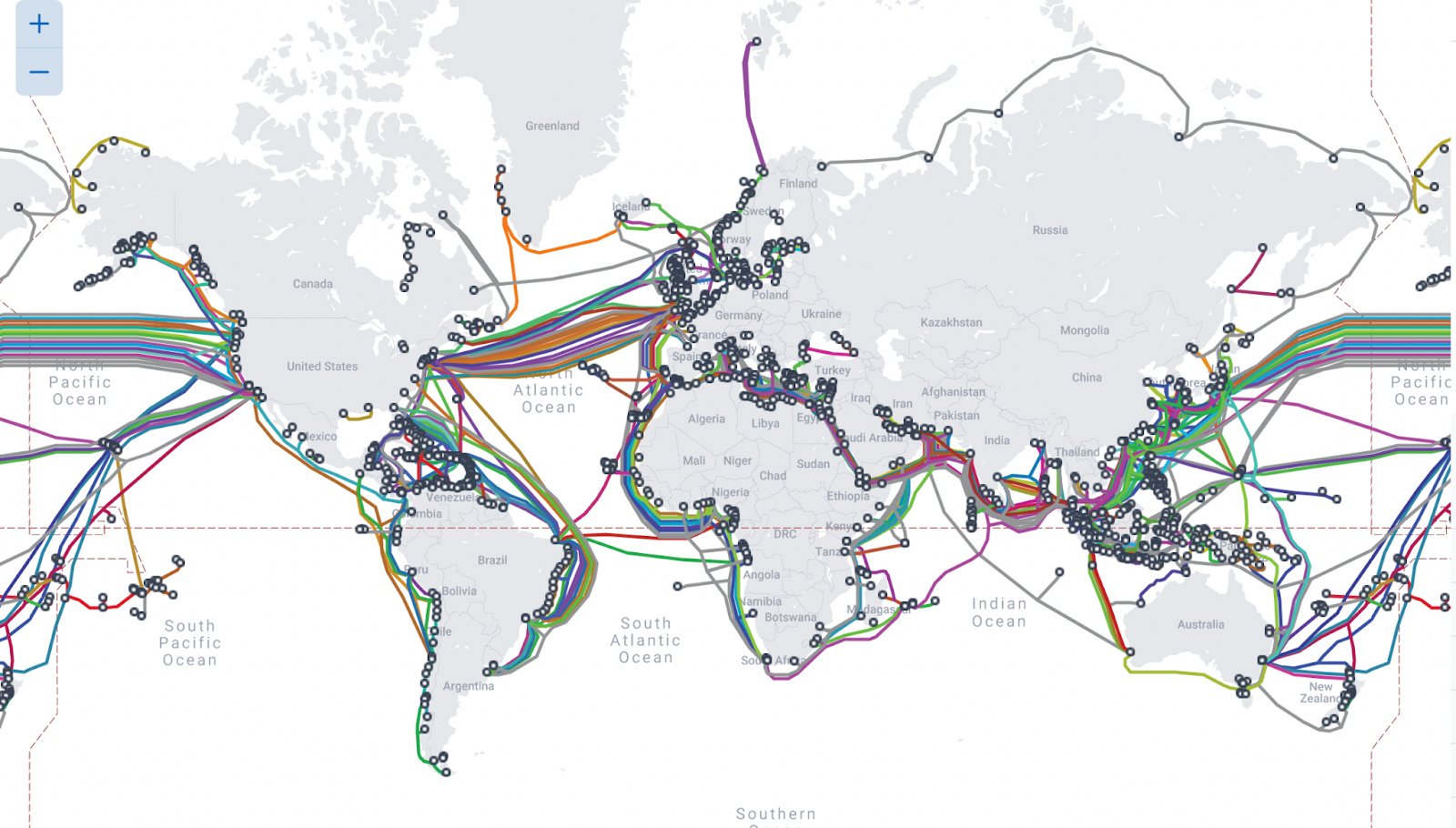
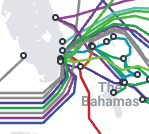
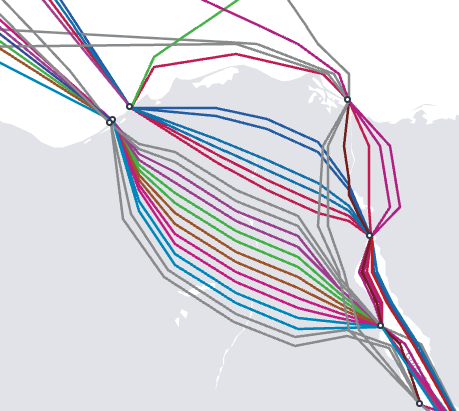
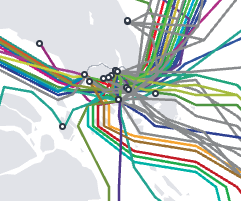
Geography is back! Geopolitics is a trending term at AI and digital events, from the World Economic Forum in Davos to mainstream media and academic conferences. It is on the verge of sliding into hype and inflated use for anything and everything digital, a common fate for tech terminology. This analysis aims to provide clarity and a framework for discussing the interplay between technology and geography across three realms: geopolitics, geoeconomics, and geoemotions. The term geography, of Greek origin (geo for land, graphia to write or describe), refers to the land itself and everything occurring on it around human existence, from economy to culture and politics. In AI and digital domains, geography expresses itself through three main dimensions: geopolitics, geoconomics, and geoemotions. Cyberspace is another widely used term, often conceived as a realm beyond the bounds of geography. However, cyberspace does not exist as an autonomous space detached from the physical world. Technically, any digital activity is always linked to physical artefacts. For instance, this text comes to you via internet packets travelling from a Diplo server in Germany through cables and routers located in physical space. Globally, over 95% of internet traffic travels through submarine cables, which are regulated by the national laws that the companies operating them have to comply with, even on the high seas. Thus, the physical nature of the internet means that any digital activity is always under some jurisdiction. The origins of the ‘cyberspace as separate space’ confusion can be traced to the famous 1996 Declaration of the Independence of Cyberspace by John Perry Barlow, which claimed cyberspace lies beyond government borders. Cyberspace remains a helpful metaphor used for ‘language economy’ – e.g. using one word that synthesises an overall digital phenomenon when we have to give titles to articles or names to government departments or types of diplomacy. Otherwise, treating cyberspace as distinct from physical space could trigger major legal and political confusion, with implications for politics and societal stability. The ‘end of geography’ was a favourite concept in the early days of the internet. It extrapolated from individuals being fascinated by the possibility of communicating across vast distances to experts arguing that existing legal and political instruments could not govern the internet, a phenomenon ‘beyond physical space’. This framing was often used to prevent government regulation, claiming cyberspace was fundamentally ‘different’ from physical space. Typical narratives argued that ‘we cannot govern 21st-century technology with a 19th-century approach.’ Paradoxically, as technology developed, it became increasingly tied to geography. Once connected, users’ physical locations could be traced and monetised, forming the basis for business models in areas such as ride-sharing, accommodation, and delivery services. With the internet of things, even bodies, vehicles, and clothing become spatially tracked. The more digital technology impacted society, the more awareness grew that the digital realm was not so different from the physical one in terms of law and regulation. Even the idea of digitally driven decentralisation has become one of history’s greatest centralisations of technological, economic, and political power, exemplified by Silicon Valley. Technology builds on traditional interplays between geography and politics, economics, and emotions, as outlined in this table Yet AI and the digital realm have specific characteristics. First is the role of tech companies, powerful actors with unprecedented influence across all three realms: geopolitics, geoeconomics, and geoemotions. No company in human history, including the British East India Company, has wielded such combined power extending beyond the economy into social and political domains. Their economic power often surpasses the GDP of entire nations. For instance, Nvidia reached a market capitalisation of around USD 5 trillion in late 2025, comparable to Germany’s GDP and larger than Japan’s or India’s. Second, tech companies increasingly use their combined power to influence politics and the economy worldwide. With the trend of economic securitisation, these companies also align their interests more closely with their home countries’ political and security priorities. Tech companies, such as OpenAI, increasingly use competition with China and economic security to avoid regulation or even be bailed out in the event of a burst of the ‘AI bubble’. Third, tech companies use data as a key strategic asset to influence international relations. For social media companies, the business model is built on user data, which is collected and analysed to extract preferences and habits. The rapid growth of AI has increased the value of data for training AI models. Thus, the future of the AI industry relies on access to data and, even more importantly, on knowledge developed and used by citizens, communities, and countries worldwide. The tension between the drive to centralise knowledge around AI models and the decentralised nature of knowledge will be one of the critical tensions in the years ahead. In the AI and digital realm, geopolitics examines how technology impacts the distribution of power, security, and political influence. Key dynamics include: Digital geopolitics revolves around: Submarine cables: More than 95% of global internet traffic travels through close to 600 submarine cables, following traditional maritime routes in Euro-Asia and the Americas. Strategic chokepoints like the Suez Canal and the Strait of Malacca are as critical to the digital economy as they have been to navigation and trade for centuries. Damage to cables (accidental or intentional) can disrupt regional economies. Moreover, the fact that big tech companies have recently also moved into deploying cable systems comes with potentially new implications in areas such as competition and dependencies. By zooming in on the submarine cable map, we can find a few geographical chokepoints with high concentrations of internet cables: Alexandria-Suez for Euro-Asian digital traffic, Miami for the Americas, and the Malacca streight for Asia. Meaning
History
Traditional ‘GEO’ and AI/digital specificities
types/
aspectsgeopolitics
GEOECONOMICS
geoemotions
Core focus
Power relations between states are shaped by geography, security, and political control
Use of economic tools and interdependence to achieve strategic and geopolitical goals
Social media friendships, trust during crises, and societal attitudes toward AI
Main actors
States, military alliances, and security institutions
States, economic blocs, companies, financial and trade institutions
Societies, publics, diasporas, online communities
Primary tools
Military force, alliances, territorial control, diplomacy
Trade, tariffs, sanctions, investment, supply chains, industrial policy
Narratives, emotions, social media interactions, public opinion
Type of power
Hard power (with some soft power)
Economic power and leverage
Emotional and perceptual power (“invisible geopolitics”)
Typical indicators
Military capabilities, borders, alliances, strategic regions
Trade flows, critical minerals, energy security, supply-chain dependencies
Trust, fear, enthusiasm, resentment, online connections, and cultural affinity
Logic of interaction
Often zero-sum, security-driven
Mixed: coercive competition and possible win–win cooperation
Non-linear; emotions can amplify or undermine rational policy choices
Role of technology
Strategic and military technologies shape power balances
Technology as a strategic economic asset (e.g. chips, energy tech)
Digital platforms reveal and amplify societal emotions and perceptions
Illustrative examples
Rivalry over territories or spheres of influence
Competition over critical minerals and energy supply chains
Social media friendships, trust during crises, societal attitudes toward AI
Relevance for diplomacy
Crisis management, deterrence, alliances
Economic diplomacy, resilience-building, and managing interdependence
Public diplomacy, narrative framing, and understanding public reactions
Visibility
Highly visible and formal
Semi-visible through markets and policies
Largely invisible, but increasingly measurable via digital data (e.g. uses, engagement, referencing)
Geopolitics
Satellites: Low Earth orbit constellations like Starlink are essential for internet access in remote areas. But their use in Ukraine has also highlighted their role in conflicts and the risks of reliance on private companies that can control access. Space-based digital infrastructure is becoming a critical domain, opening debates on the roles and responsibilities of satellite companies in this strategic domain, as well as an interplay with the role of governments in outer space
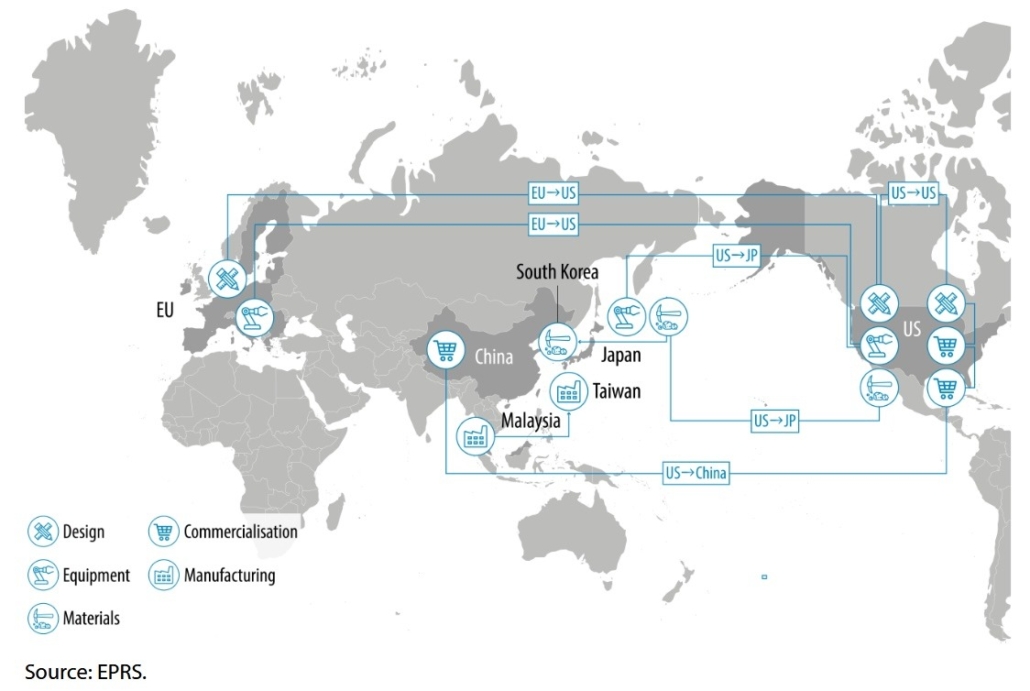
Semiconductors: Microchips are central to geopolitical rivalry, especially between the US and China. Control over design, advanced fabrication, and supply chains is seen as fundamental to economic and military power, driving export controls and initiatives focused on domestic production (e.g., US CHIPS and Science Act, European Chips Act).
Impacts on politics: Tech platforms (Meta, X, Google, etc.) are central to political campaigning. Vast user data enables targeted advertising, as seen in the Cambridge Analytica scandal (2016 US election). They can also act as powerful vectors of mis- and disinformation, with consequences such as amplifying polarisation, undermining trust in institutions, and affecting the integrity of elections and overall functioning of democratic processes.
Digital geoeconomics leverages trade, investment, supply chains, and technology to influence international politics and advance national interests. It uses both positive tools (market access) and restrictive ones (sanctions, export controls). It overlaps with, but is more strategically competitive than, traditional economic diplomacy.
Tech companies wield unprecedented economic power. Tech giants increasingly face pushback from national governments and local champions (e.g., India’s Flipkart, Argentina’s Mercado Libre). Bottom-up financial initiatives like Africa’s M-Pesa and Brazil’s Nubank also support regional resilience.
The competition for data is ultimately about capturing collective knowledge, making it a critical geopolitical and geoeconomic resource. A trend toward data sovereignty sees countries mandating local storage for critical data (e.g., health records), but this can conflict with integration into the global digital economy. Data localisation laws will significantly impact tech companies reliant on cross-border data flows.
Emotions are increasingly central, though often invisible, to global politics and digital development. They critically shape digital interactions and AI adoption.
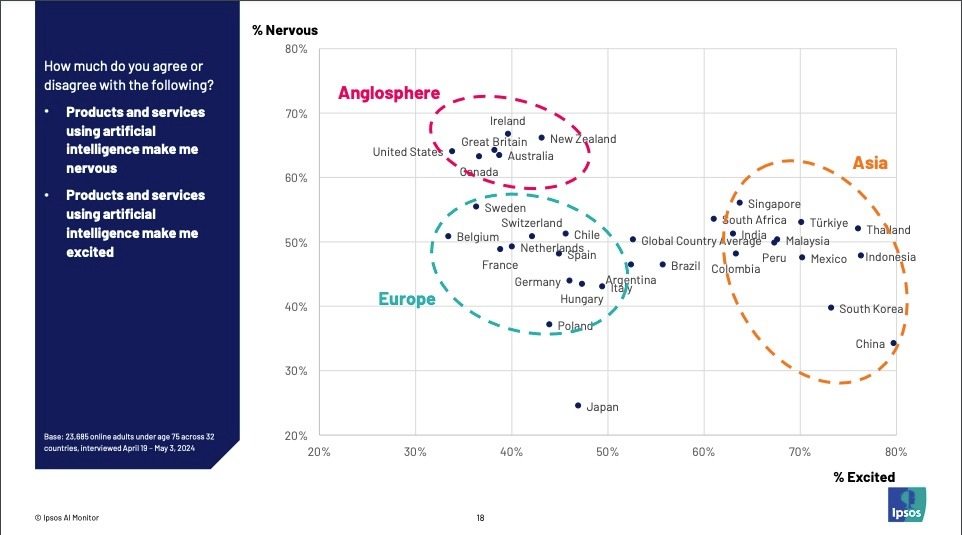
Striking differences exist globally. According to a 2024 IPSOS AI Monitor Study, 80% of Chinese respondents reported excitement about AI technology, compared to only 34% in the United States. This reflects a broader trend of higher receptiveness in many Asian societies compared to Western ones.
The rise of artificial intelligence and digital technologies will further increase the relevance of geography. The early internet dream of a borderless cyberspace has given way to a more complex reality: every digital activity is anchored in physical infrastructure, subject to territorial laws, and shaped by the strategic imperatives of nations and corporations.
This analysis has framed this recalibration through three interconnected lenses:
At the heart of this triad lies a historic shift: the ascendance of tech companies as geopolitical actors wielding a combination of economic, social, and political influence unmatched by any corporate entity in history. Their control over the critical resource of data and knowledge further solidifies their central role. Yet, the growing pushback from states asserting regulatory and sovereign control, the rise of regional tech champions, and an intensified global competition for technological supremacy may mark an inflexion point.