Few fields have seen artificial intelligence’s transformative power as vividly as medicine and pharmaceutical research. In labs and living rooms around the world, AI models are enabling breakthroughs that were unimaginable just a decade ago. These tools not only accelerate the pace of discovery but also make it possible for non-experts to contribute to life-saving innovations. From designing personalised cancer vaccines for beloved pets to using supercomputers that aim to shorten drug development timelines, AI is redefining what is possible in healthcare. But these advances are not just about technology. They are also personal stories. For example, Paul Conyngham, an Australian AI consultant without a biology background, used free AI tools to design a cancer vaccine that reduced his dog Rosie’s tumour by 75% in one month. There’s also the story of a pharmaceutical AI supercomputer with 9,000 petaflops of power, now testing billions of molecular ideas to deliver new treatments to patients more quickly. These stories show that AI is becoming a partner and a driving force in medicine. When used well, it can help make healthcare more accessible to everyone. Still, as AI advances, important questions arise. Who will benefit from AI in healthcare? How can we ensure these tools are fair, ethical, and accessible to all? What part should international organisations play in guiding their use worldwide? At humAInism.ai, these questions are at the heart of our work. AI clearly has the power to improve lives, both human and animal. But to truly deliver on its promise, we must face its challenges with careful planning, fairness, and a focus on people’s needs.

In early 2026, Paul Conyngham faced a heartbreaking reality. His rescue dog Rosie, a spirited companion diagnosed with an aggressive tumour, had been given only months to live. With no background in biology but a deep understanding of AI, Conyngham turned to the tools at his disposal, specifically ChatGPT, AlphaFold, and Grok, to design a personalised mRNA cancer vaccine for Rosie. Within weeks, researchers at the University of New South Wales’ RNA Institute translated his AI-generated sequence into a viable treatment. The results were stunning. Rosie’s tumour shrank by 75% within a month of her first injection.
Conyngham’s story is more than a testament to the bond between humans and their pets. It is a proof of concept of how AI can democratise medical innovation. He has emphasised that he is not a scientist by training, but that AI has given him the ability to ask the right questions and find answers that work. His collaboration with UNSW researchers highlights a new paradigm in which AI serves as a bridge between amateur ingenuity and professional expertise.
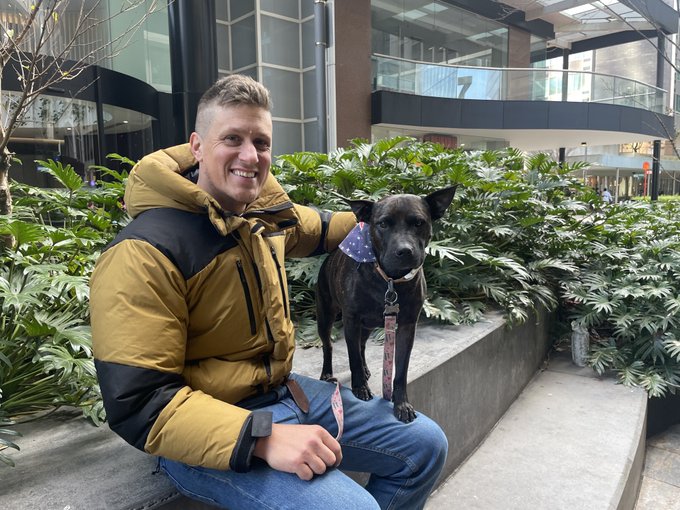
But this story also shows where AI still falls short. Rosie’s treatment worked, but not all tumours will respond the same way. The AI models Conyngham used were trained on only a small amount of veterinary data, so it’s unclear how well these methods will work for others. Experts say this is just a first step. To make these treatments reliable, we need more data, more testing, and better teamwork.
Rosie’s recovery is a testament to AI’s potential. However, scaling such treatments requires overcoming three key obstacles:
For patients and pet owners alike, Rosie’s case offers a glimpse of a future where personalised medicine is not just for the privileged few but for anyone with access to the right tools.
While Conyngham’s story happened at home, a new wave of pharmaceutical AI supercomputers is showing what AI can do on a much larger scale. Launched in early 2026, these machines have thousands of petaflops of processing power. One example, the LillyPod supercomputer, shows how research groups and companies are building similar tools to change drug discovery. Traditional labs can only test a small number of molecules each year, but these AI supercomputers can test billions of ideas at once, creating a digital “dry lab” that could cut the time from discovery to market by years.
These supercomputers are already making a difference. In areas like Alzheimer’s disease, AI is being used to combine large sets of data, find new drug targets, and redesign clinical trials so patients are enrolled at the right time. This helps promising drugs show real results. But there is a downside. While these supercomputers speed up discoveries, the new medicines they help create often come with high price tags. This raises worries that not everyone who needs these treatments will be able to get them.
Another issue is how much energy these supercomputers use. They need a lot of electricity, similar to other big data centers, which raises questions about the environmental impact of AI in medicine. Many organizations say they will invest in renewable energy to make up for this, but some critics believe it’s better to make the technology itself more efficient instead of just offsetting the extra demand.
These cases show that AI is changing drug development by enabling multiple tests simultaneously, whether for obesity, cancer, or personalised vaccines.
The stories of Rosie and the AI supercomputers show that AI can be both helpful and a source of inequality. As these technologies grow, three main ethical issues become clear:
Solving these problems will take teamwork between scientists, policymakers, and ethicists. This is the only way to make sure AI-driven healthcare is fair, open, and responsible.
For organisations and individuals working at the intersection of governance, AI ethics, and global health equity, the stories of Rosie and AI supercomputers underscore the need for three key actions:

By focusing on these areas, we can help ensure that AI-driven healthcare remains transparent, inclusive, and accountable, advancing innovation while protecting the rights and well-being of all patients.
AI’s place in medicine is still developing. Still, the stories of Rosie and the AI supercomputers show what could be possible. These tools are already saving lives, speeding up research, and letting more people take part in innovation. But to reach their full potential, we need to face the challenges they bring and make sure they are used fairly, openly, and ethically.
For those changing the future of AI in healthcare, whether as policymakers, researchers, clinicians, or advocates, the task is clear. We must champion policies and partnerships that make AI-driven healthcare accessible, affordable, and accountable. As Rosie’s story shows, sometimes the most powerful innovations begin not in a lab but in a place of love and desperation. The question now is how we scale that spirit responsibly, equitably, and with humanity at the centre.
Author: Slobodan Kovrlija