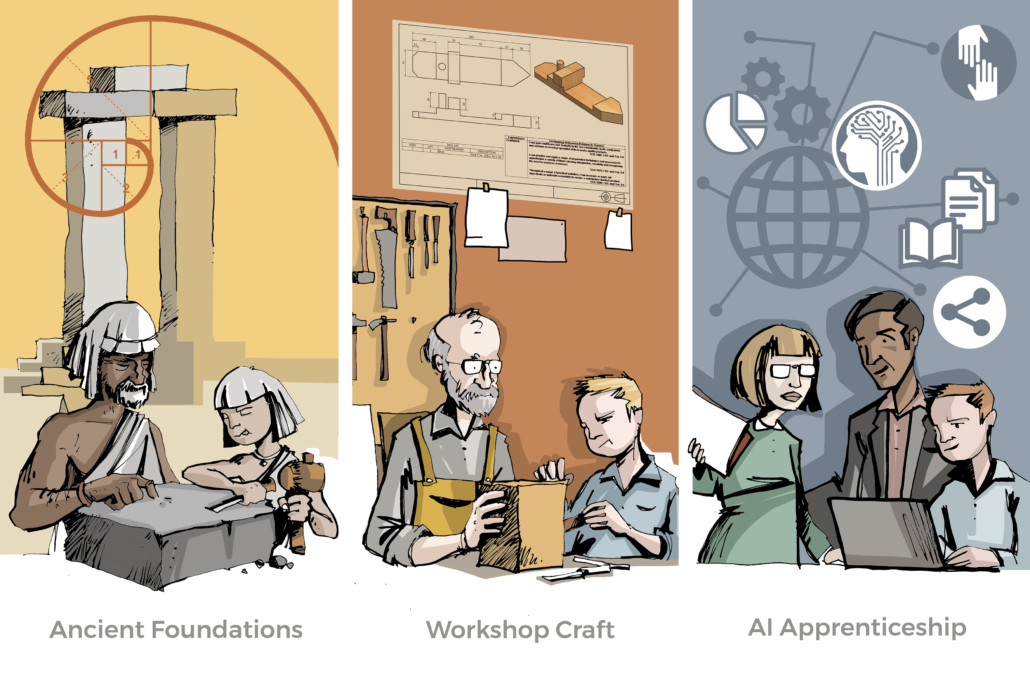
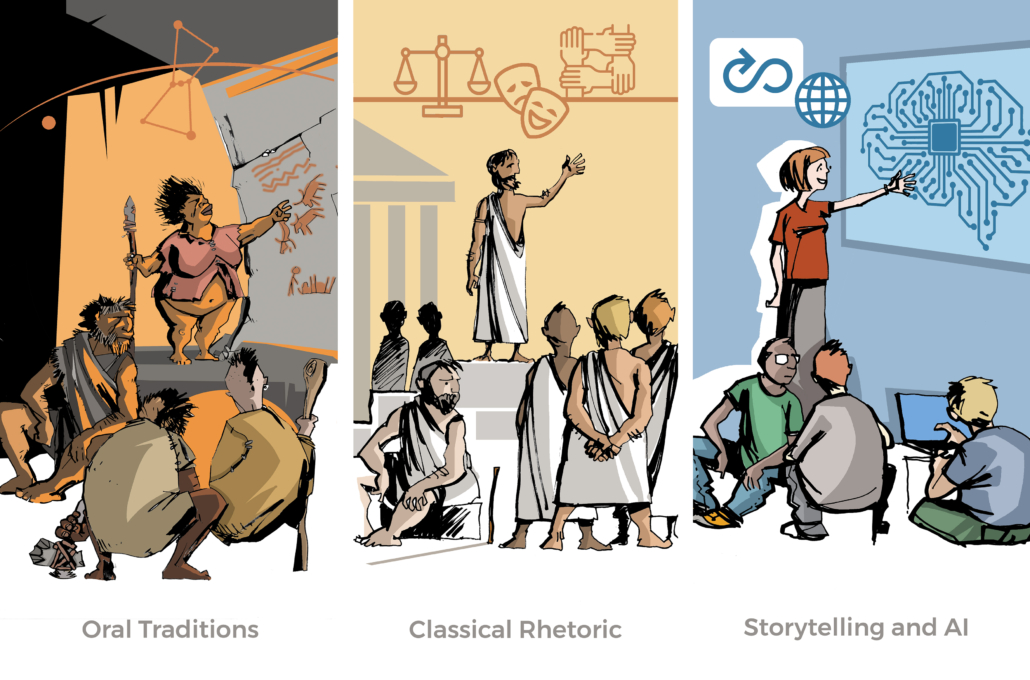
The most immense challenge for AI and education is not technology itself. It’s our pedagogy and the way we teach. This simple chart says it all: ChatGPT uses among students drops sharply at the end of the academic year. Why? Because AI has become a tool for finishing essays, assignments, and theses, tasks shaped by outdated academic requirements. Students are acting rationally: if they are asked to write essays in an often obsolete pedagogical style, they use AI to complete this task the most efficiently and ‘tick the box’. Universities and schools have been responding with bans and plagiarism checks. Yet none of this solves the real problem: learning isn’t happening. It is time to get back to the basics of learning and core questions: how do we learn? Throughout human evolution, we have been learning through apprenticeship (learning by doing) and storytelling (learning through telling and listening to stories). These two ancient pedagogical pillars provide the basis for the future of learning in the AI era, as explored in Diplo’s courses and research. The most effective way of learning is through practice, and AI is no exception. Understanding how neural networks or large language models work cannot come from textbooks alone; it emerges through experimenting, testing, and building. Here, AI presents a new pedagogical challenge. Unlike the deterministic disciplines of traditional science and engineering, rooted in Cartesian logic and certainty, AI is fundamentally probabilistic. This makes apprenticeship-style learning far more effective for grasping its nature. Think of it like cooking, another probabilistic craft. A recipe only comes alive when you step into the kitchen, work with ingredients, and learn from someone more experienced, whether that’s your mum or a Michelin-star chef. AI apprenticeship works in the same way. By building chatbots or experimenting with AI agents, students gain genuine hands-on expertise. In the process, they also discover AI’s practical value: personalising learning paths, enhancing creativity, and freeing human brainpower for what matters most—critical thinking and problem-solving. Writing essays, at its best, is part of humanity’s oldest learning tradition: telling stories. Around fires, through myths, or in philosophy, stories have always given structure to our knowledge. Sadly, in modern academia, this tradition has often been reduced to a formality of writing essays, a way to collect credits rather than to explore ideas. No wonder students turn to AI to get the job done. To address this challenge, at Diplo we have been working to bring storytelling back to life in education. One method is hypertext annotation, in which students follow a narrative in online courses and enrich it with comments, questions, and references. This keeps the flow of storytelling while opening space for dialogue and critical thinking. We’re also testing personalised learning powered by AI, where each student’s materials, timing, and style are adapted to their needs. In many ways, this gives students something once reserved only for the wealthy: one-on-one mentoring.
Standardisation of education over the last few decades was designed to support the exchange of credits, foster mobility, and ease employment opportunities. The Bologna Process in the EU, along with similar initiatives worldwide, has brought many positive impacts to society and the economy. On the negative side, however, the formalisation of education shifted the focus from genuine learning to fulfilling formal requirements centred around collecting credits and checking off competencies. AI, through approaches such as apprenticeship models and storytelling, can help swing the ‘learning pendulum’ back. It can rebalance the system by enabling personalised learning and fostering critical thinking, while still preserving the benefits of standardisation.
Our AI Apprenticeship Programme gains a lot of traction with, so far, close to 200 AI apprentices. This year we will deliver 4 more programmes. We’ll also continue experimenting with storytelling in the AI era, exploring hypertext, personalisation, and multimedia. The future of learning may look high-tech, but in truth, it takes us back to the very origins of education: apprenticeship and storytelling. That’s where real learning begins!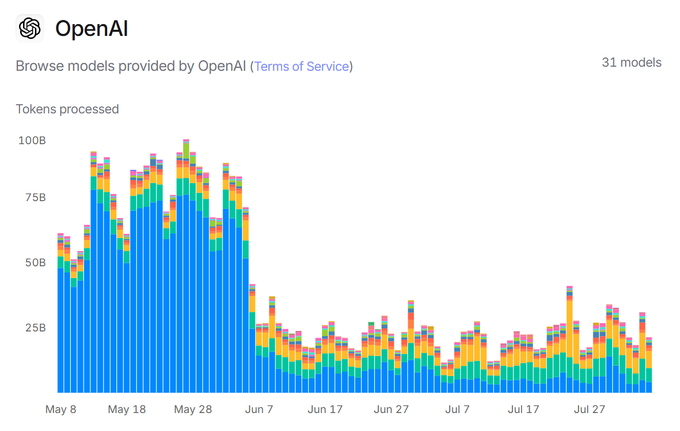
Apprenticeship
Storytelling
AI can help solve the core of the current crisis of educational systems
What’s next